
Last updated November 20, 2026
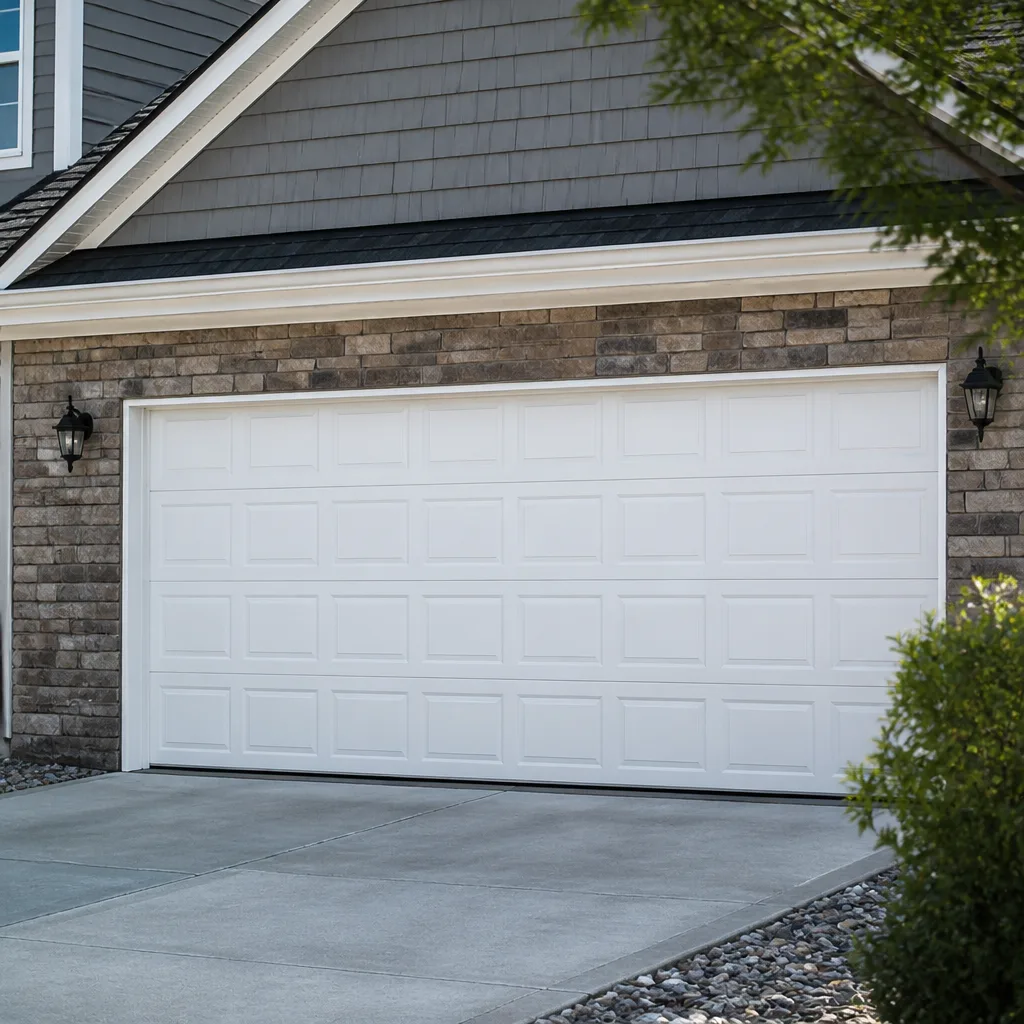 Raised-panel steel
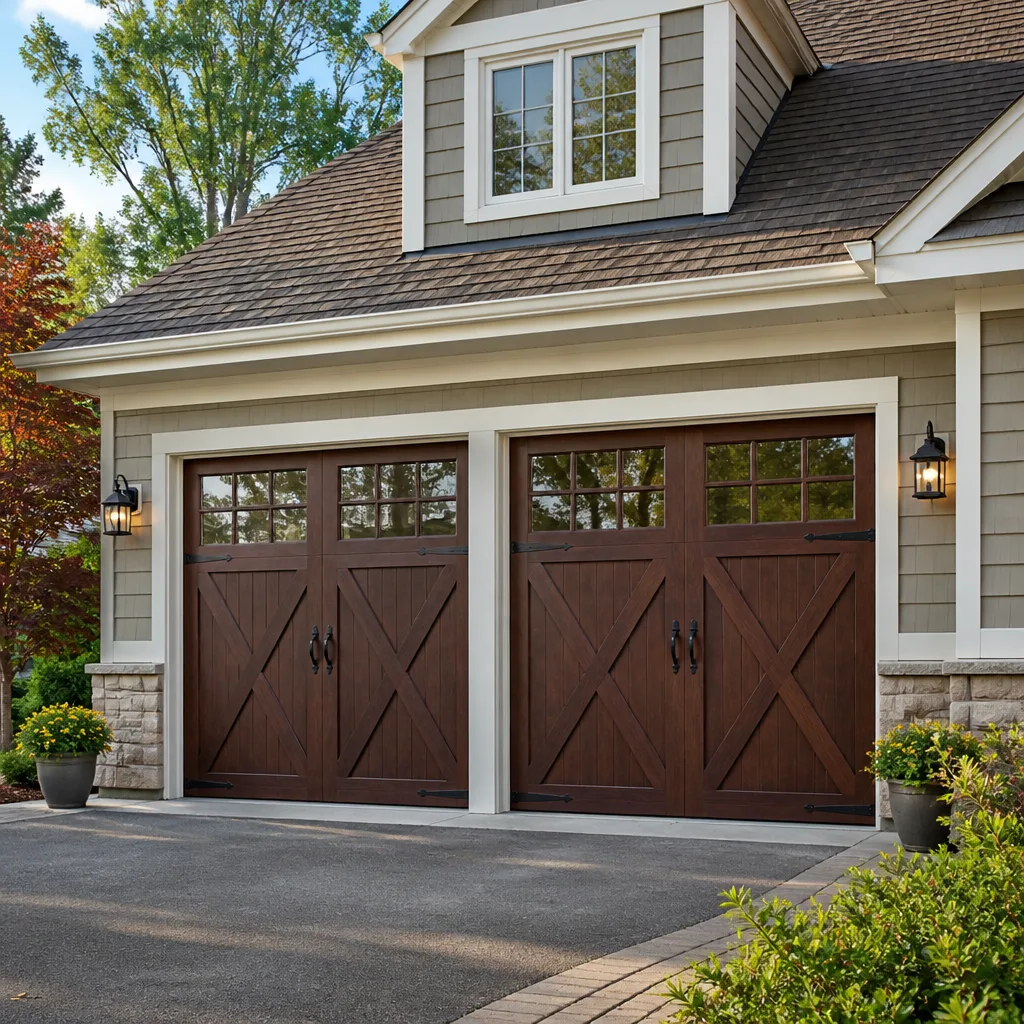 Carriage house
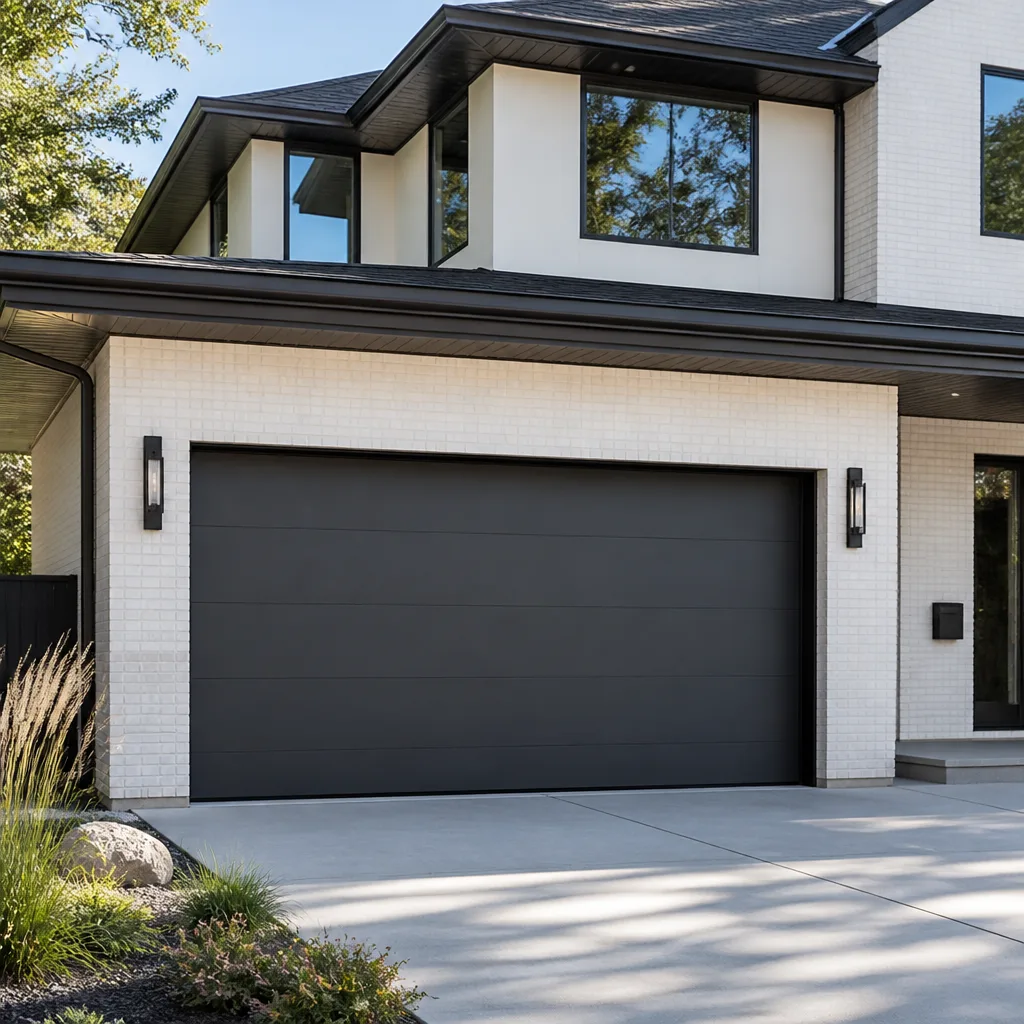 Modern flush
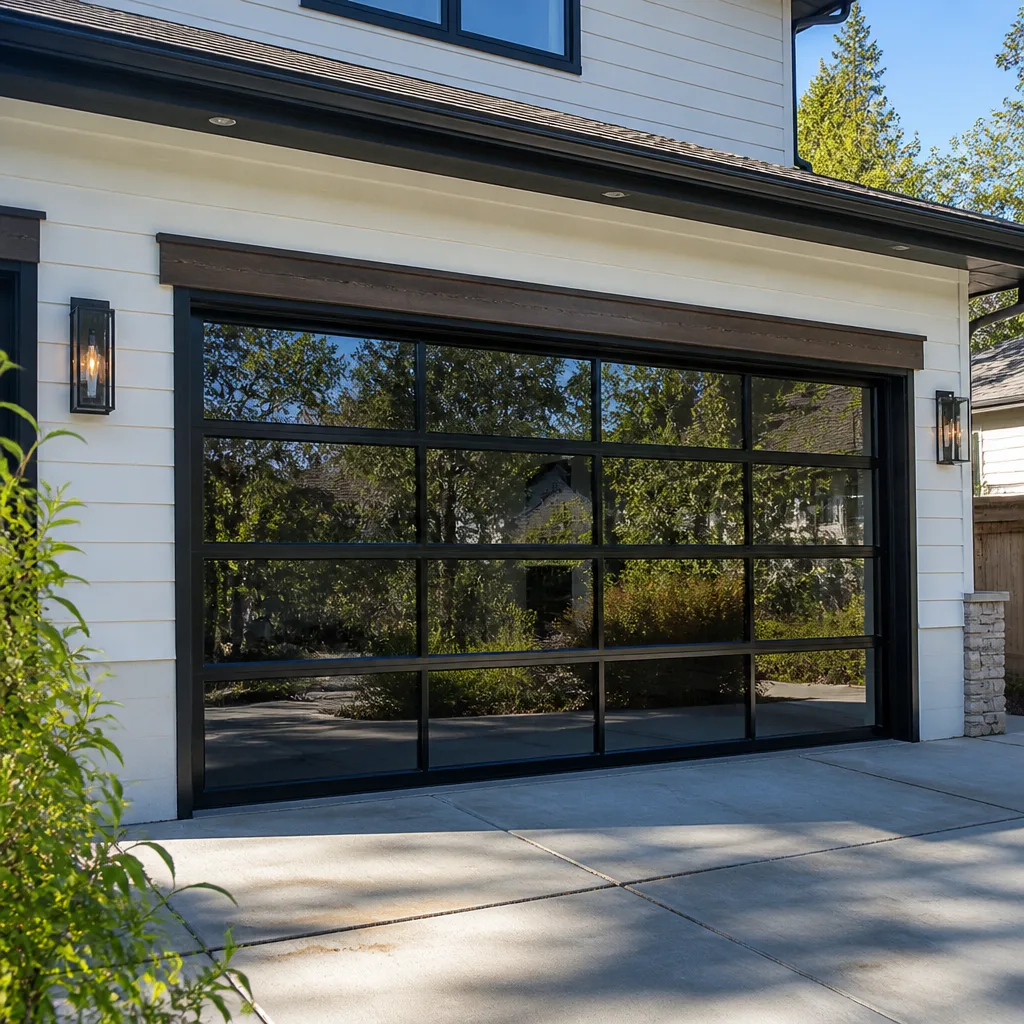 Full-view glass
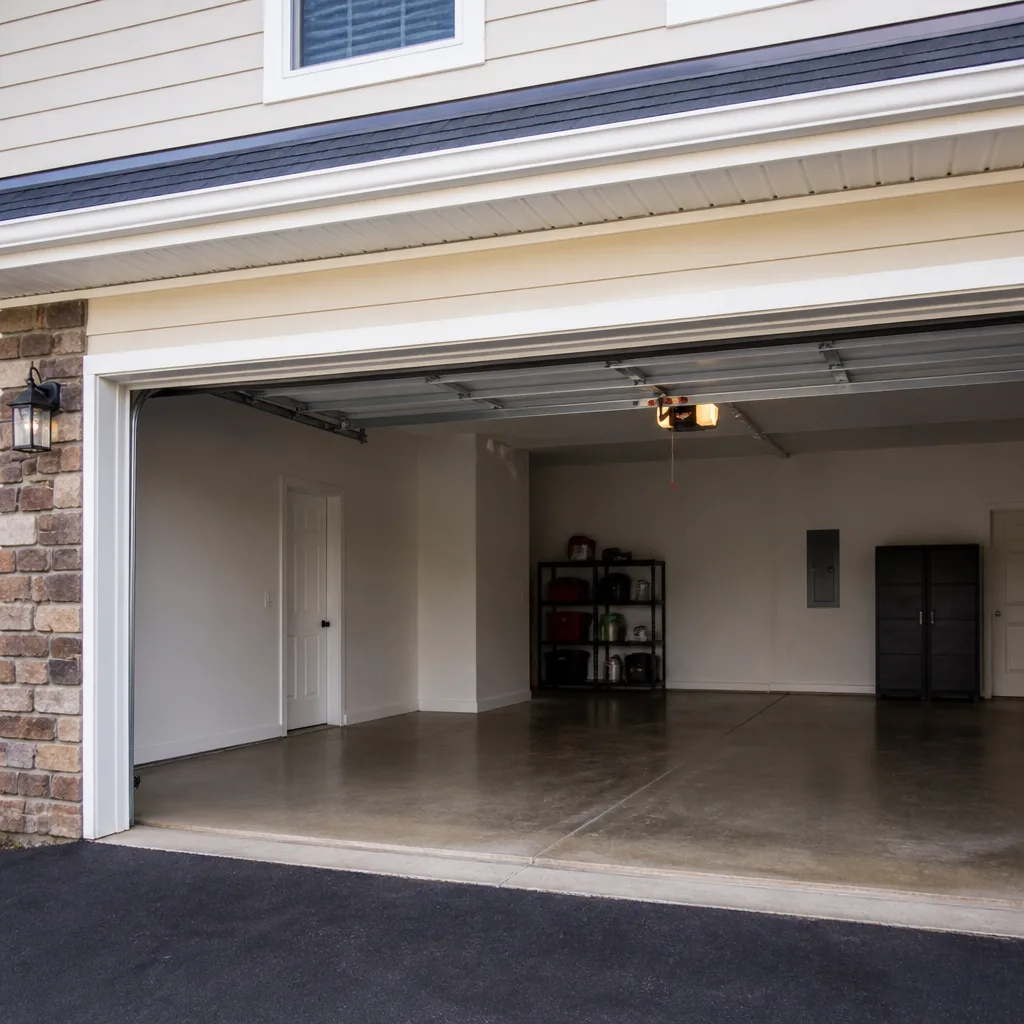 LiftMaster openers
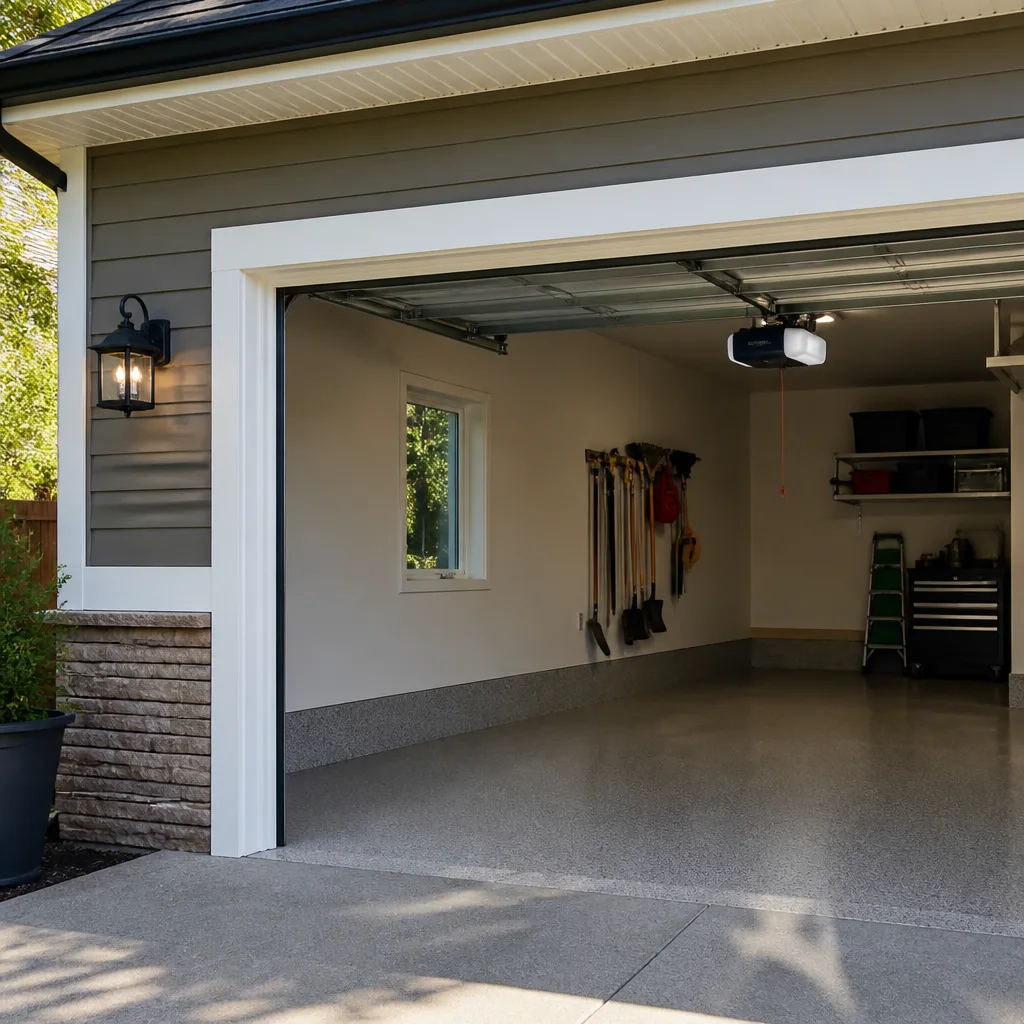 Chamberlain openers
Full 25-point door and opener safety check with every visit - springs, cables, rollers, tracks, and your LiftMaster or Chamberlain opener included
You get a price before we start. It does not change when the pro arrives.
Get your free estimateSeasonal Garage Door Care for Elizabeth: Year-Round Homeowner’s Guide
Most garage door advice tells you to winterize and calls it done. That misses the season that actually breaks the most doors in Elizabeth. When a cold snap ends and the mercury climbs through the forties and fifties, every piece of metal in the door that contracted all winter starts to expand, and the torsion springs carrying the door’s weight feel every one of those cycles. Homeowners watch for trouble in January. The failures tend to show up in the thaw. This guide walks through a full year of garage door care built around Elizabeth’s real weather swing, the humidity that warps wood panels in summer, and the wind events that strip weatherstripping every fall. You’ll get a month-by-month calendar, the specific warning signs to check, and clear guidance on what you can handle yourself versus what belongs with a trained technician.
Styles & brands we work with
- Raised-panel steel
- Carriage house
- Modern flush
- Full-view glass
- LiftMaster openers
- Chamberlain openers
Quick Answer
Garage door care in Elizabeth runs on a four-season cycle: check spring balance and lubrication in late winter before the thaw, watch wood and composite panels for swelling through the humid summer, replace worn weatherstripping ahead of fall nor’easter winds, and test opener force settings when cold weather strains the motor. The single highest-risk moment for torsion spring failure is the freeze-thaw swing in late February and March, not the depths of January.
Table of Contents
- Why Elizabeth’s Climate Is Hard on Garage Doors
- Month-by-Month Care Calendar for Elizabeth
- The Spring Thaw: Highest-Risk Window for Springs
- Summer Humidity and Wood or Composite Panels
- Fall Weatherstripping Prep for Wind Events
- Winter Opener Strain: Balance Problem or Motor Problem?
- Lubrication and Hardware Check by Season
- Common Mistakes to Avoid
- When to Call a Professional
- Frequently Asked Questions
Why Elizabeth’s Climate Is Hard on Garage Doors
Elizabeth sits in a climate band that rarely gives garage doors a break. Winters get cold enough to drive metal contraction and stiffen lubricants, but not so consistently cold that doors stay frozen in one state. That’s the problem. A door that stays at twenty degrees is under steady stress. A door that swings from the teens to the forties and back within a week is under moving stress, and moving stress is what fatigues torsion springs, hinges, and opener gears.
Then summer arrives with real humidity. Garage doors are often the largest moving object on a property, and wood and composite panels absorb that moisture on a daily rhythm. Fall brings the wind. Elizabeth gets occasional nor’easter-level events that push rain sideways into door openings, and weatherstripping that looked fine in July starts letting water past in October.
What this means for a homeowner in Elizabeth is simple: your door doesn’t get a maintenance “season.” It gets four of them, and each one asks something different of the hardware.
The neighborhoods matter too, though less than the weather. A door on a house in Elmora faces the same freeze-thaw swing as one near the Elizabeth waterfront, and the same summer humidity. What changes block to block is wind exposure and how much sun the door face gets, which affects paint and panel drying. A north-facing door in Elizabeth dries more slowly after rain, which is worth knowing when you’re checking wood panels for soft spots.
If your door is already showing trouble, the seasonal work below is still worth doing, but the immediate fix belongs with garage door repair before small seasonal wear becomes a snapped cable or a bent track.
Month-by-Month Care Calendar for Elizabeth
You don’t need to remember twelve separate tasks. Group them by season and check the work off once. Here’s the calendar we hand to homeowners who ask what to watch and when.
- January: Test the door’s balance by hand with the opener disengaged. Listen for grinding or popping as the door travels. Cold-weather noise is normal; a rhythmic pop is not.
- February: Lubricate hinges, rollers, and the torsion bar bearings with a garage-door-specific lubricant, not WD-40. Inspect springs visually for gaps, rust, or a stretched coil. This is your last easy check before the thaw.
- March: Watch the springs hardest this month. Feel for a door that’s suddenly heavier to lift or that slams down faster than it used to. Those are balance symptoms, and balance symptoms in March often mean a spring is near failure.
- April: Check the bottom seal and side weatherstripping for cracks after the freeze-thaw season. Clear debris from the track channels.
- May: Inspect wood and composite panels for paint failure, soft spots, or panel edges that feel spongy. Humidity is climbing now, so catch moisture problems before summer peaks.
- June through August: Watch for panel swelling, sticking doors, and a door that rubs the frame when it closes. Test the auto-reverse safety feature monthly by placing a roll of paper towels under the door path.
- September: Replace worn weatherstripping and the bottom seal before fall wind events. Tighten hinge and bracket bolts; the seasonal expansion loosens them.
- October through November: Re-test opener force settings as temperatures drop. Clear gutters and door tracks of leaf debris. Lubricate moving parts again before the first hard freeze.
- December: Do a full visual walkaround: springs, cables, rollers, track alignment, and the opener’s safety sensors. Note anything you want a technician to look at in the new year.
That’s the whole calendar. Nine checkpoints, most of them ten-minute inspections. The value is in the timing, not the effort.
The Spring Thaw: Highest-Risk Window for Springs
Here’s the counterintuitive part of owning a garage door in Elizabeth: the danger window for a torsion spring is late February into March, not the coldest week of January. All winter, the steel in your springs has been contracting and getting marginally more brittle with each cold snap. When the temperature swings back up, the metal expands, and the spring has to absorb a rapid change in load while the door itself may still be stiff and heavy from the cold.
We’ve seen this pattern play out across Elizabeth season after season. A spring that survived a hard winter without a sound snaps in the first warm week of March, usually while the door is coming down and the homeowner is standing right there.
What to check in February, while it’s still easy to catch:
- Balance test: Disengage the opener, lift the door to waist height, and let go. It should stay put. If it falls or rises on its own, the spring has lost tension.
- Visual spring inspection: Look for a visible gap in the coil, heavy rust, or a spring that looks noticeably stretched compared to a neighboring coil. Any of those means it’s time to call someone before it fails.
- Sound check: Run the door and listen. A sharp bang from the overhead mechanism is often the sound of a spring letting go mid-cycle.
- Feel check: If the door feels dramatically heavier than it did in the fall, the springs aren’t carrying the load they should.
One critical safety note: torsion springs and their cables are under extreme tension, and they’re the single most dangerous part of a garage door system. Never attempt to adjust, wind, or replace one yourself. If you suspect a spring problem, keep the door closed and call a professional. That’s exactly the work our garage door spring repair service covers, and it’s core work for us rather than something we pass along to someone else.
Summer Humidity and Wood or Composite Panels
By July, the humidity in Elizabeth is doing a different kind of damage. Wood panels absorb moisture and swell. Composite panels do it more slowly, but they still move. When a panel swells, it doesn’t just look bad: it binds against the frame, throws the door out of alignment, and can bend hinges and distort track over a season.
The swelling signs to catch early:
- Sticking on close: The door starts catching on one side before it reaches the floor. That’s usually a swollen panel or a frame that’s shifted with the moisture.
- Spongy panel edges: Press gently along the bottom and side edges of wood panels. If a fingernail sinks in, moisture has gotten under the paint.
- Bubbling or lifting paint: Paint failure is the first visible sign that water is getting into the wood. Once paint lifts, the moisture problem is already a few weeks old.
- Rubbing sounds: The door scrapes the weatherstripping or the jamb on one side when it travels. That’s usually panel swelling pushing the door off center.
- Visible seams opening: Look at the panel joints. Moisture-related movement shows up there before almost anywhere else.
Clopay and Amarr are two of the panel systems we work on most often, and both make wood and composite doors that will swell here if the finish fails. The fix isn’t to replace the door. In most cases, catching a swelling problem early means sanding, resealing, and adjusting the door or track. Left alone for a summer, it can mean panels and hardware both.
Our experience is that homeowners in Elizabeth check their door paint once, years ago, and never look again. Make the panel check a spring habit and you’ll avoid most of this.
Fall Weatherstripping Prep for Wind Events
Weatherstripping is the cheapest part of a garage door and the one that causes the most expensive damage when it fails. It’s the seal around the perimeter of the door, and it does two jobs in Elizabeth: it keeps cold air and rain out, and it absorbs the wind pressure of the nor’easter-level events that hit this region in the fall.
When it’s worn, the consequences are direct. Wind-driven rain gets in and sits on the door panels and the track. Cold air gets in and drives your heat bill. And in a stiff gust, worn stripping lets the door rattle against the frame, which wears the hinge points faster.
Here’s the fall check we recommend:
- Run your hand around the full perimeter of the closed door. You shouldn’t feel gaps or drafts at any point.
- Look at the bottom seal. It should still touch the floor with slight compression. A bottom seal that’s hardened, flattened, or torn lets in water and wind.
- Check side and top stripping for cracking, tearing, or a hollow feel. Once stripping goes hollow, it’s not sealing anything.
- Tighten hinge and bracket bolts. Seasonal expansion has almost certainly loosened them by fall.
- Check the track for out-of-square condition. A door that rattles in the wind is often misaligned in the track, not worn in the stripping.
Weatherstripping replacement is a reasonable DIY job if you’re comfortable with it. If the door is out of square or the track is bent, that’s a different situation, and we’d rather you stop than try to force a fix. Fall is also the season when we get the most calls about a Wayne Dalton or Craftsman door that’s started squealing and running rough. That’s usually a combination of worn rollers and a track that’s drifted through the year. We work on your brand, whichever one is on the door.
Winter Opener Strain: Balance Problem or Motor Problem?
When a door starts struggling in cold weather, the automatic assumption is that the opener is tired. In our experience, that assumption is wrong more often than it’s right. The opener is doing what it was asked to do. The springs just aren’t helping it anymore.
The physics are simple. The torsion springs carry the door’s weight, so the opener only needs to guide and lift. When a spring has lost tension through the cold months, the opener has to carry some of that weight itself, and it was never designed to. In cold weather, the grease in the opener’s gearbox thickens, the door’s metal stiffens, and everything gets harder at once. The opener gets blamed, but if you look at the balance test, the springs are usually the culprit.
How to tell the difference:
- Balance test first. Disengage the opener and lift the door by hand. If it’s heavy and doesn’t stay put, it’s a spring or balance problem.
- Listen to the opener. A grinding sound from the motor or a chattering gear means the opener itself is worn. A smooth motor with a heavy door is a balance problem.
- Check the force settings. Openers have a force adjustment that needs to be re-tested as temperatures change. If the door won’t travel the full cycle in cold weather, the force setting may just need adjusting.
- Watch the safety sensors. Cold weather can fog the sensor lenses. If the door reverses for no apparent reason, clean them before assuming anything bigger.
If the diagnosis points at the opener, that’s garage door opener repair and we handle it. If it points at the springs, that’s a different fix, and it’s the one we’d rather catch in December than in March.
Our technicians have up to 12 years of experience, and that’s enough time to tell the difference between a motor problem and a balance problem that’s disguising itself as one.
Lubrication and Hardware Check by Season
Lubrication isn’t a once-a-year task on a door that lives in Elizabeth’s climate. What you use and when you use it changes with the season.
- Winter: Use a garage-door-specific lubricant on hinges, rollers, and the torsion bar bearings. Cold-stiffened lubricant is half the reason doors run rough in January. Don’t use a thick grease; it gets harder, not smoother, in cold weather.
- Spring: Re-lubricate everything you checked in February before the thaw. The door will be moving more freely as temperatures climb, and moving parts benefit from a fresh coat.
- Summer: Humidity is the enemy now. Wipe down rollers if you see rust spots. Keep the track clean of debris; a track full of grit is a track that wears faster through the summer.
- Fall: The final lubrication pass before winter. Also the time to check cable condition; cables that have been through a full year of freeze-thaw deserve a close look, and cable replacement is not a DIY job.
What never goes into the process: heavy grease on the springs, WD-40 on rollers, or anything on the cable. The track and springs need specific treatment, and the wrong lubricant makes things worse.
Common Mistakes to Avoid
- Waiting until it breaks. A door that fails on a Tuesday morning when you’re trying to leave for work is a much worse situation than a door you had inspected in March. Elizabeth’s freeze-thaw pattern is the single biggest reason to inspect before the thaw rather than after.
- Assuming winter is the only season of concern. The summer humidity that swells wood panels and the fall wind events that strip weatherstripping cause at least as many repairs in Elizabeth as the cold weather does.
- Trying to adjust torsion springs yourself. This is the single most dangerous mistake on the list. Springs and their cables are under extreme tension, and there is no version of this that belongs in a homeowner’s hands. Keep the door closed and call a trained professional.
- Using the wrong lubricant. WD-40, thick axle grease, or anything not designed for garage door hardware will gum up rollers, attract grit, and make the door harder to move in cold weather, not easier.
- Blaming the opener for a balance problem. Most wintertime “opener” calls are really spring calls. Testing balance before calling an opener technician saves money and time.
- Ignoring paint failure on wood and composite panels. By the time the paint is visibly lifting on a Clopay or Amarr wood panel in Elizabeth’s humidity, moisture has already been in the wood for weeks. Catch it at the first bubble, not the first soft spot.
- Skipping the balance test. It’s the single most useful thing you can do for your door, it takes thirty seconds, and most homeowners never do it.
When to Call a Professional
Some seasonal checks belong to you. Others absolutely don’t. Call a professional if the door won’t stay at waist height during a balance test, if you hear a sharp bang or pop from the overhead mechanism, if a spring shows a visible gap or heavy rust, if a cable has snapped or frayed, if the door has come off its track, or if the door reverses for no reason after you’ve cleaned the safety sensors. Any of those situations is a job for someone trained to handle springs and cables, and the risk of a DIY attempt is real injury. Weatherstripping and lubrication you can handle. Spring and cable work you should not.
Elizabeth Garage Door Repair Co offers free estimates in Elizabeth. Call (866) 937-7593. We answer 24/7. Fast dispatch from 7am to 7pm, Sunday through Friday. Every price is quoted in a written estimate and agreed before any work starts, so you know the number before we touch the door.
Frequently Asked Questions
The spring thaw, usually late February into March, is the highest-risk window for torsion spring failure. Metal contracts through the winter cold, then expands rapidly when temperatures climb, which stresses springs that are already fatigued. The summer humidity and the fall wind events each bring their own risks, but the late-winter swing is the one that catches most homeowners off guard.
Yes, lubrication is a reasonable DIY task. Use a garage-door-specific lubricant on hinges, rollers, and torsion bar bearings, and avoid WD-40 or thick grease, which gum up in cold weather. Don’t attempt to lubricate, adjust, or replace springs or cables yourself; those are under extreme tension and require a trained technician.
Run the balance test first. Disengage the opener, lift the door by hand to waist height, and let go. A door that stays put has working springs and a possible opener issue. A door that drops or rises on its own has a spring problem, even if the opener is what alerted you. If you’re unsure, call (866) 937-7593 and we’ll diagnose it on site.
Not every year, but check it every fall. Elizabeth gets occasional nor’easter-level wind events that put pressure on the door’s perimeter seal, and worn stripping lets in wind-driven rain and cold air. If the seal is still compressing against the floor and you can’t feel drafts around the closed door, it’s fine. If it’s hardened, torn, or hollow, replace it before the fall winds arrive.
Yes, but it’s usually fixable. Sticking in Elizabeth’s humid summers is typically a sign that wood or composite panels have absorbed moisture and swelled, which can bend hinges and distort the track if left alone. Catching it early and resealing the door usually prevents any structural damage. If the door has already started rubbing the frame, call for an inspection before the swelling gets worse.
Yes, same-day and emergency service are available for doors that can’t wait. A broken spring or a door off its track shouldn’t keep you stuck; call (866) 937-7593. We answer 24/7, with fast dispatch from 7am to 7pm, Sunday through Friday. Every price is quoted in a written estimate first, and you’ll know the number before any work begins.
The Bottom Line
Garage door care in Elizabeth isn’t a once-a-year task. It’s a four-season cycle, and each season asks something different of the hardware. Check springs and balance in February before the thaw. Watch wood and composite panels for swelling through the humid summer. Replace weatherstripping ahead of fall wind events. Test the opener’s balance against its own force settings when winter strains the motor. Catch the seasonal warnings and most repairs stay small. Ignore them, and the same problem shows up bigger and more expensive later. Our technicians have up to 12 years of experience and work on eight major brands including LiftMaster, Chamberlain, Genie, Clopay, Amarr, Wayne Dalton, Craftsman, and Raynor, so one call covers the seasonal check and any repair that comes out of it. Call (866) 937-7593 for a free estimate. We answer 24/7. Fast dispatch from 7am to 7pm, Sunday through Friday. A seasonal tune-up now is quicker and cheaper than a snapped spring in March.
Written by the team at Elizabeth Garage Door Repair Co.
See the difference
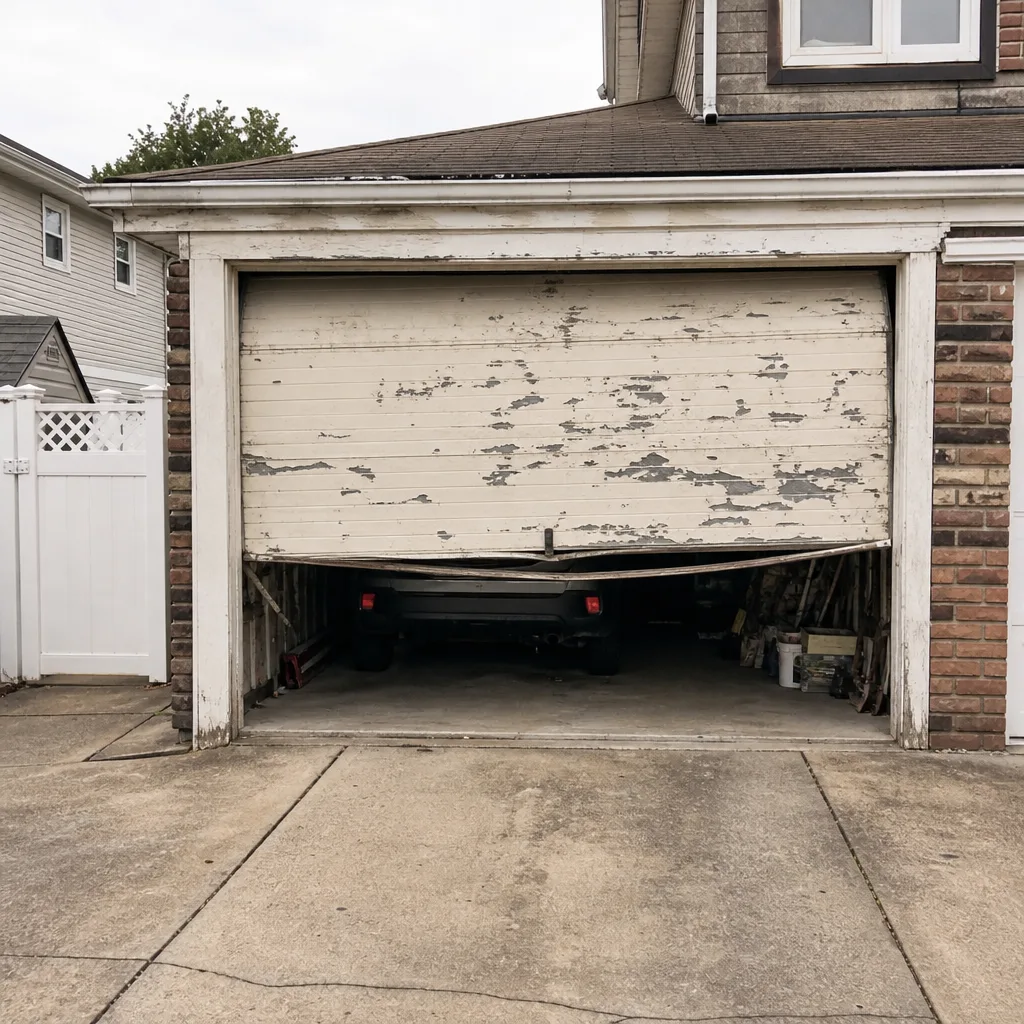 Before
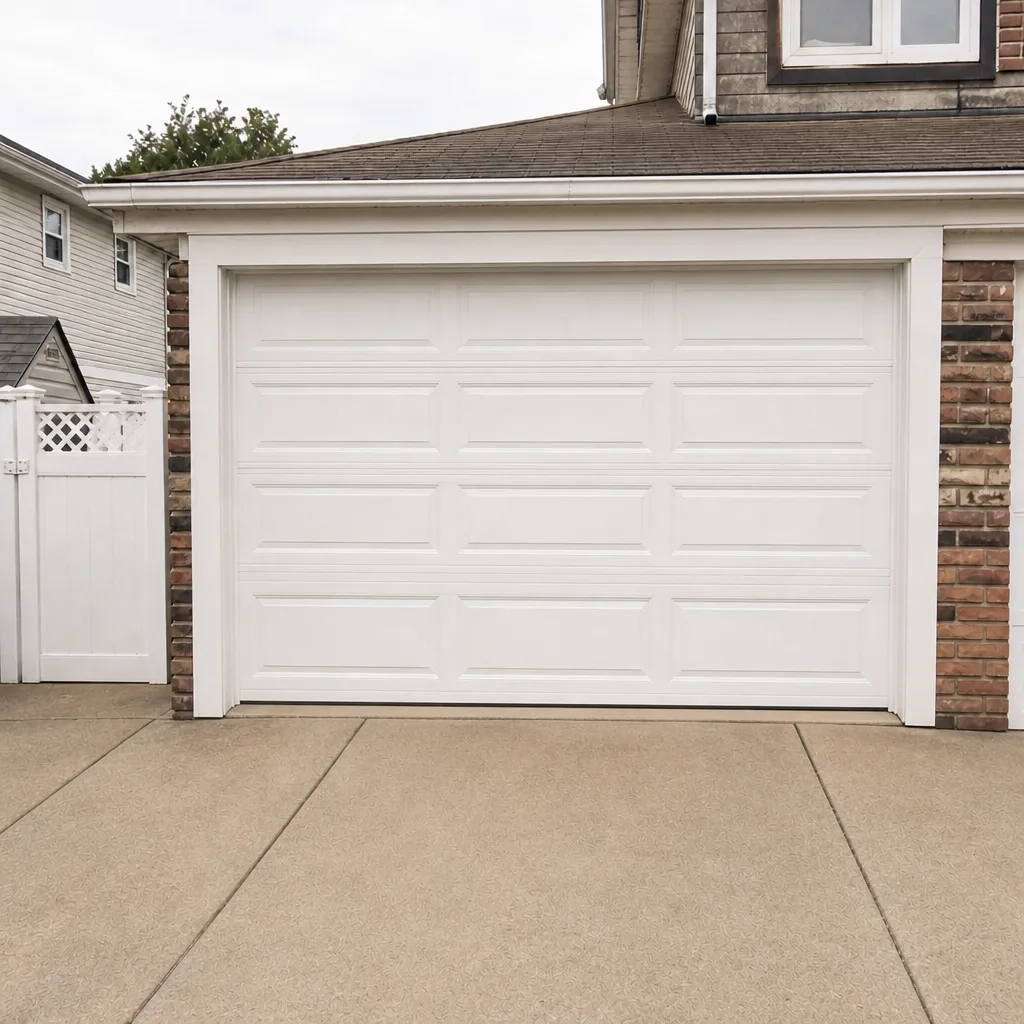 After
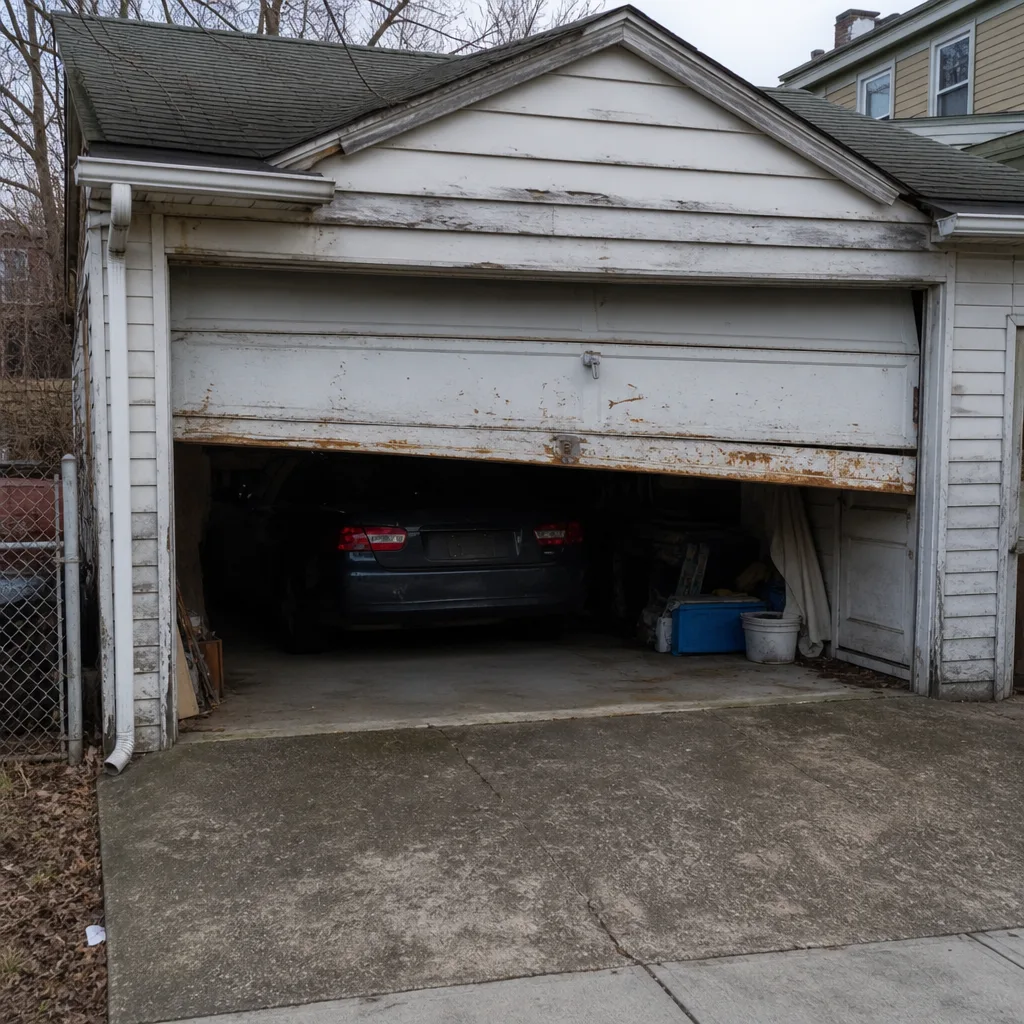 Before
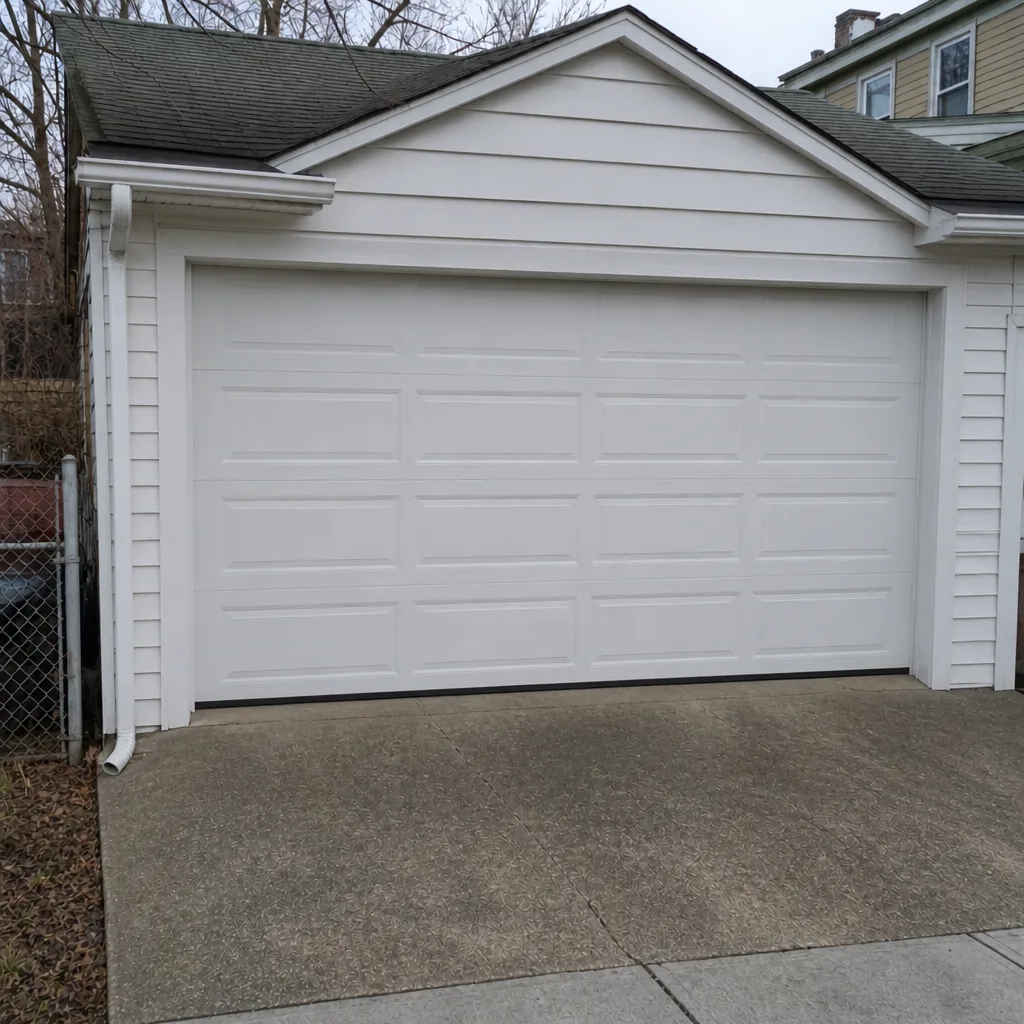 After
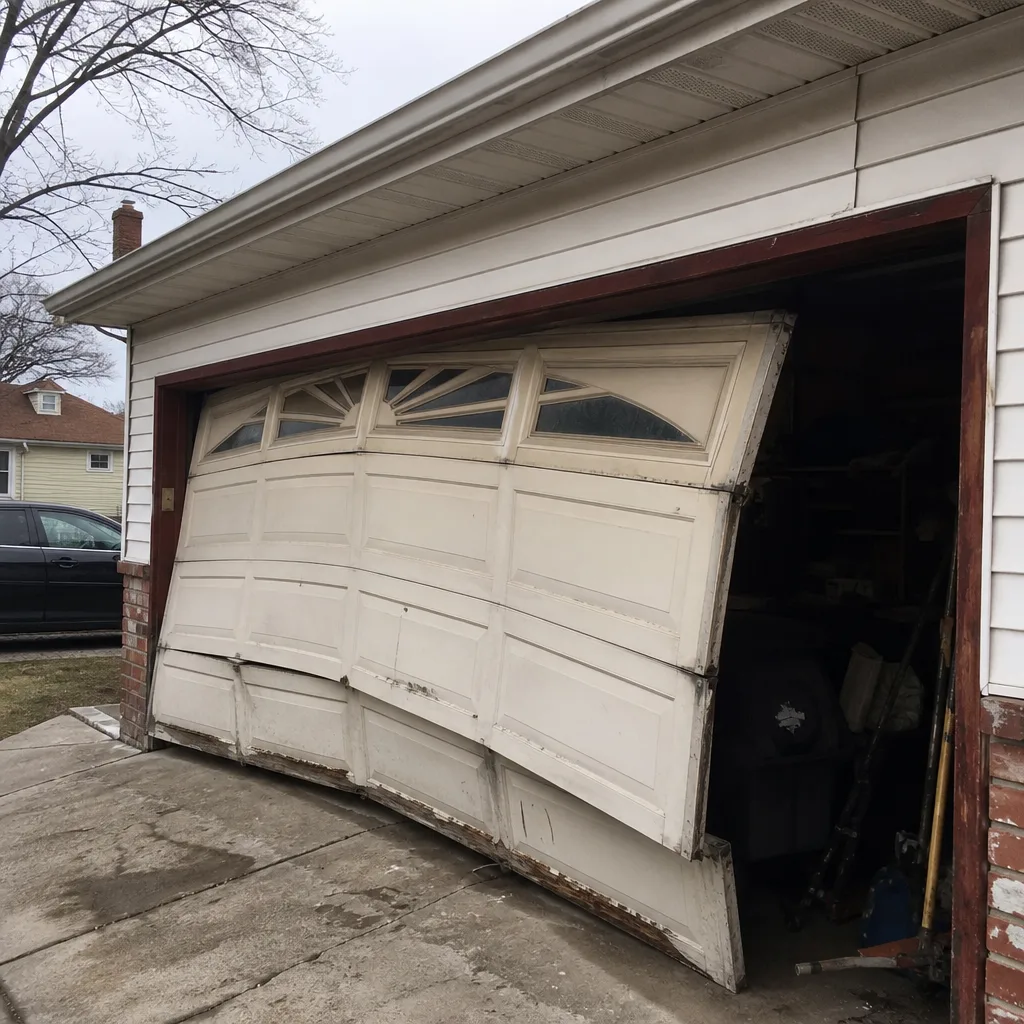 Before
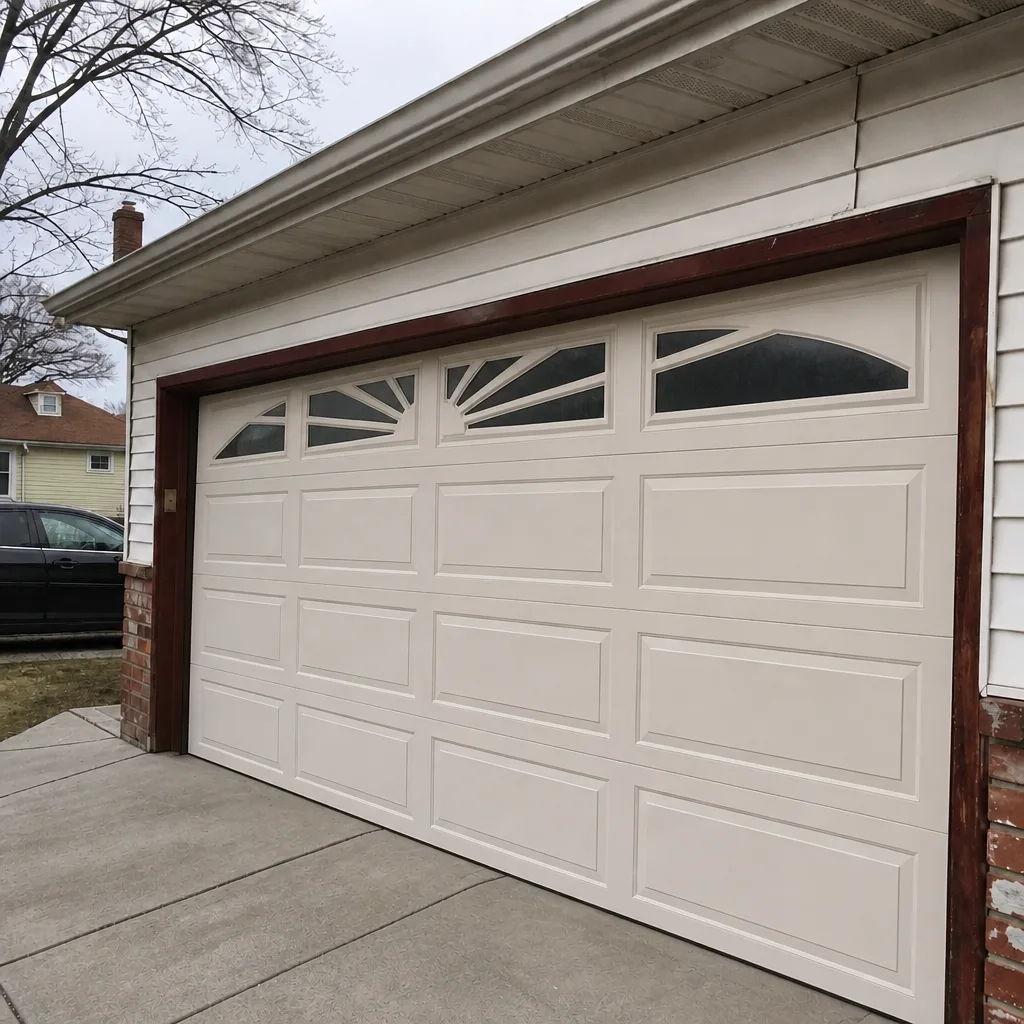 After