
Last updated November 20, 2026
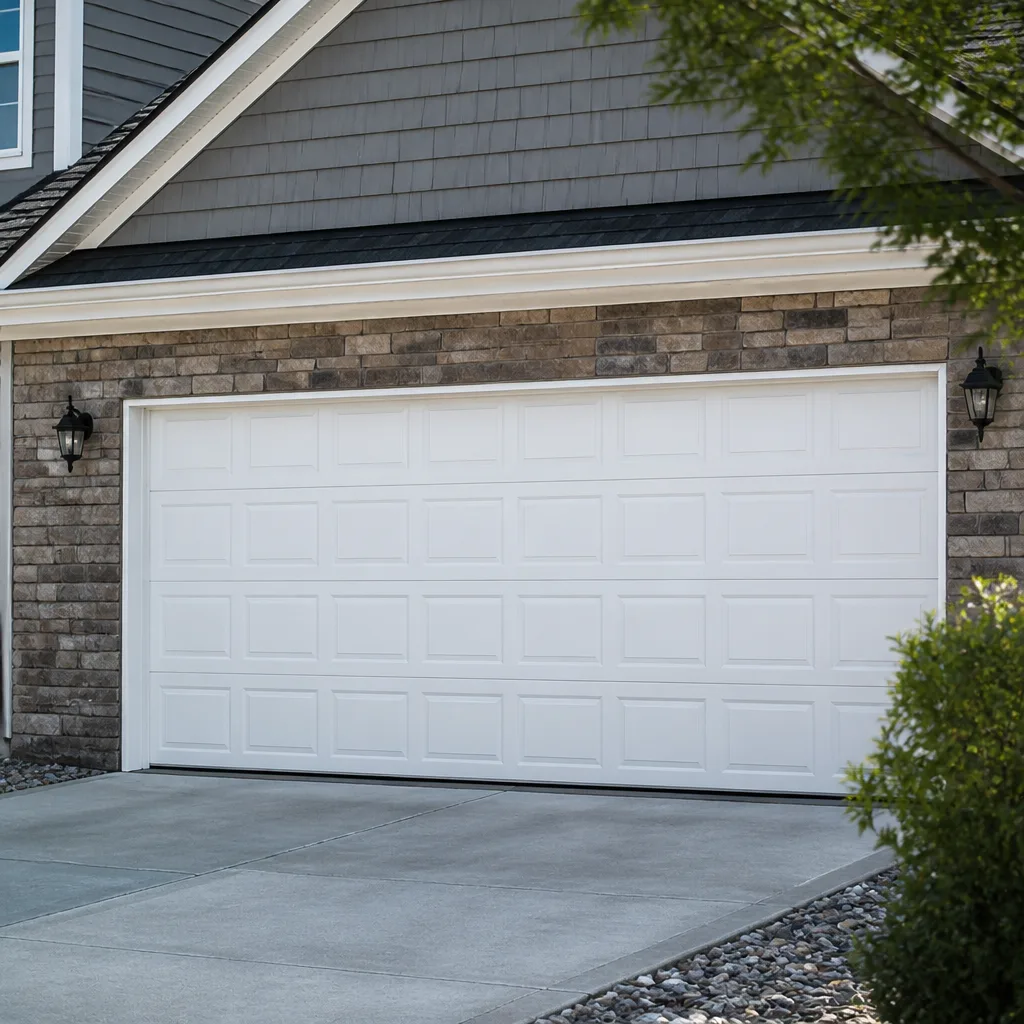 Raised-panel steel
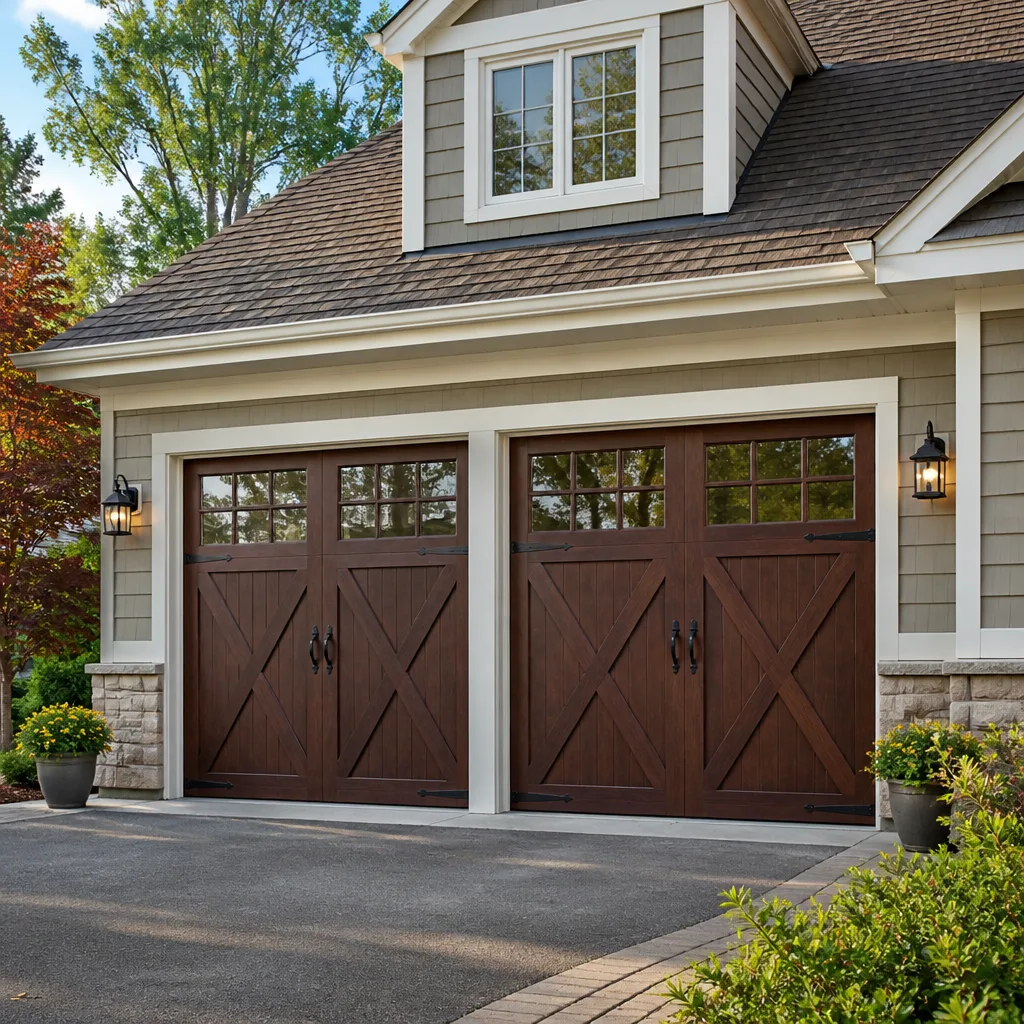 Carriage house
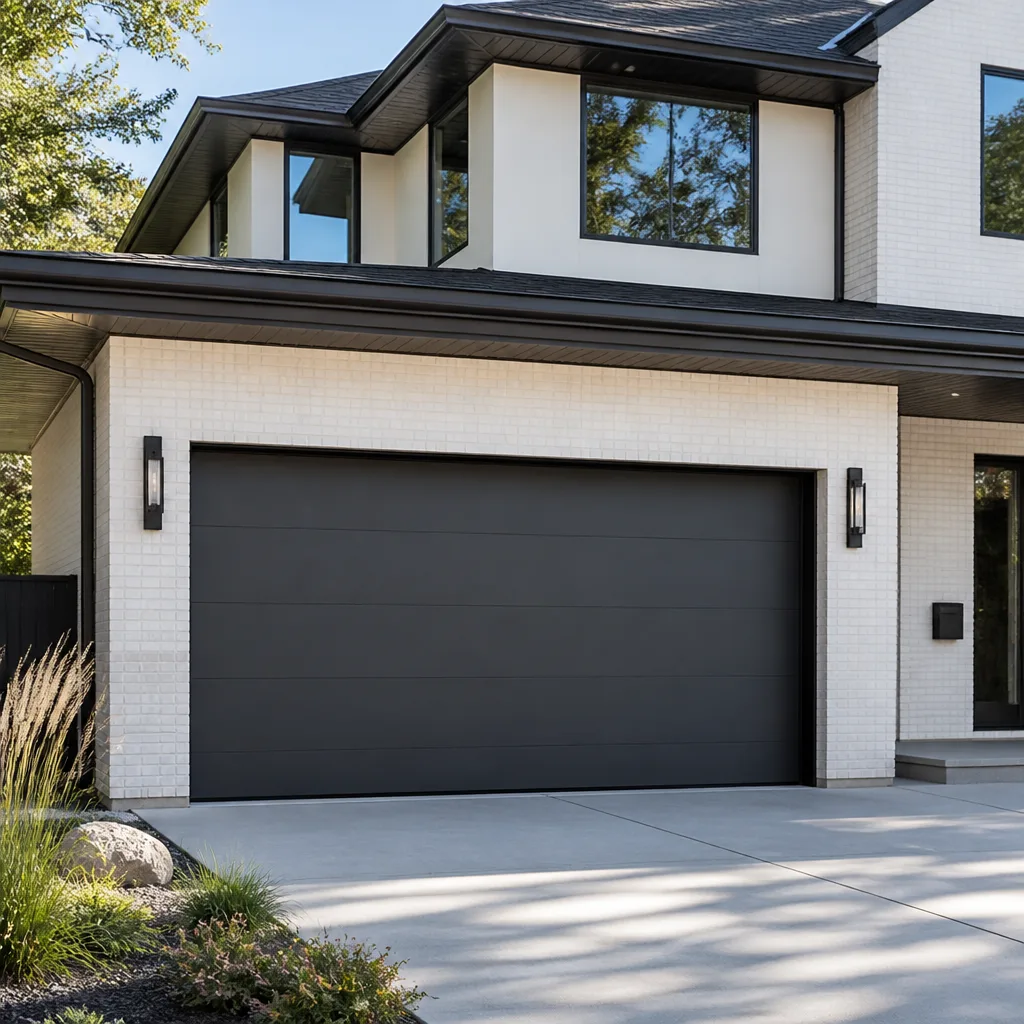 Modern flush
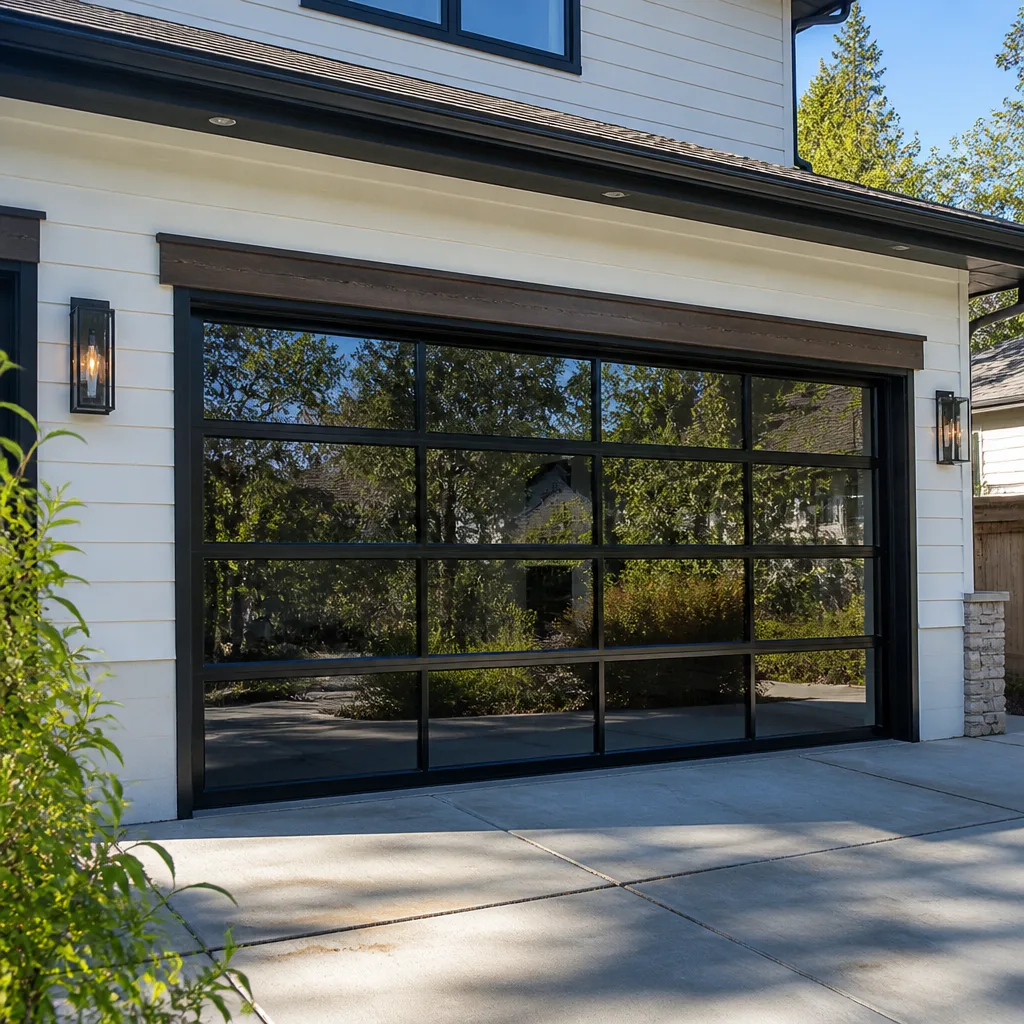 Full-view glass
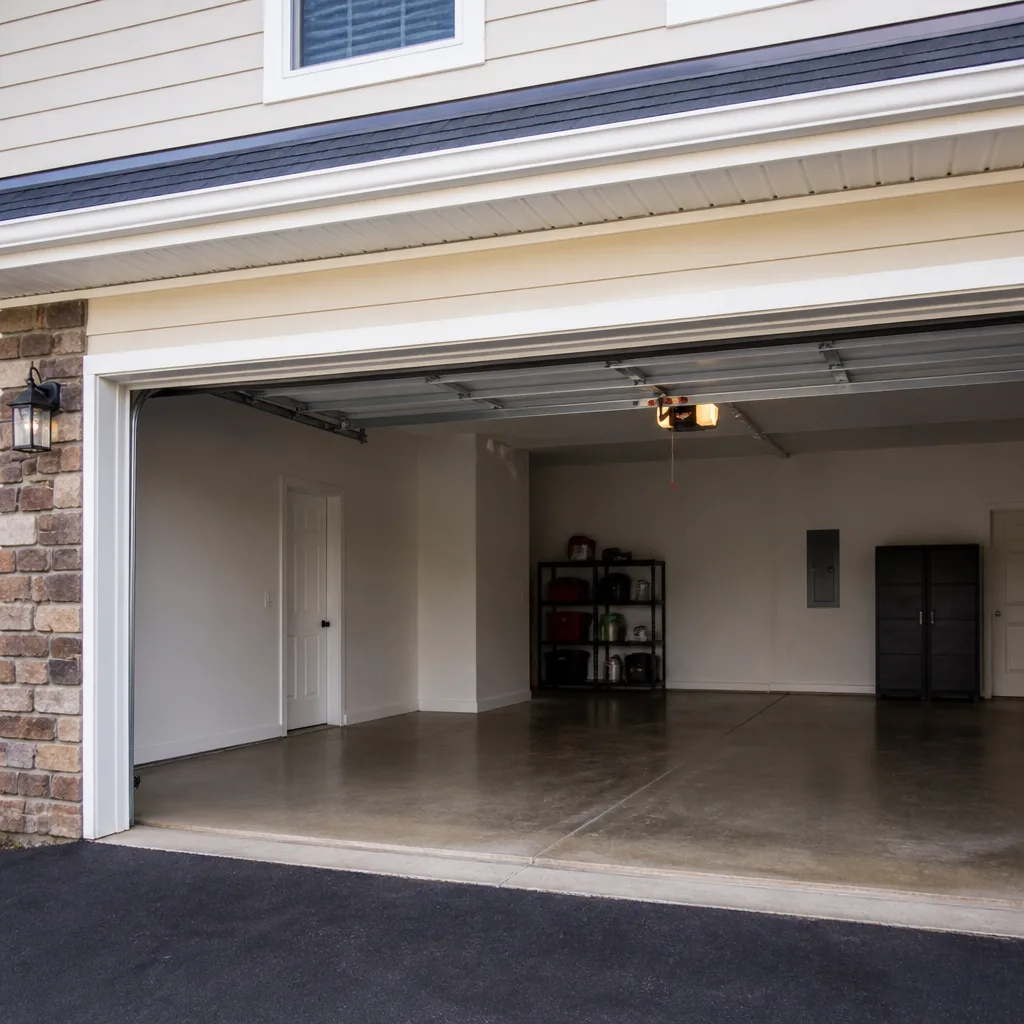 LiftMaster openers
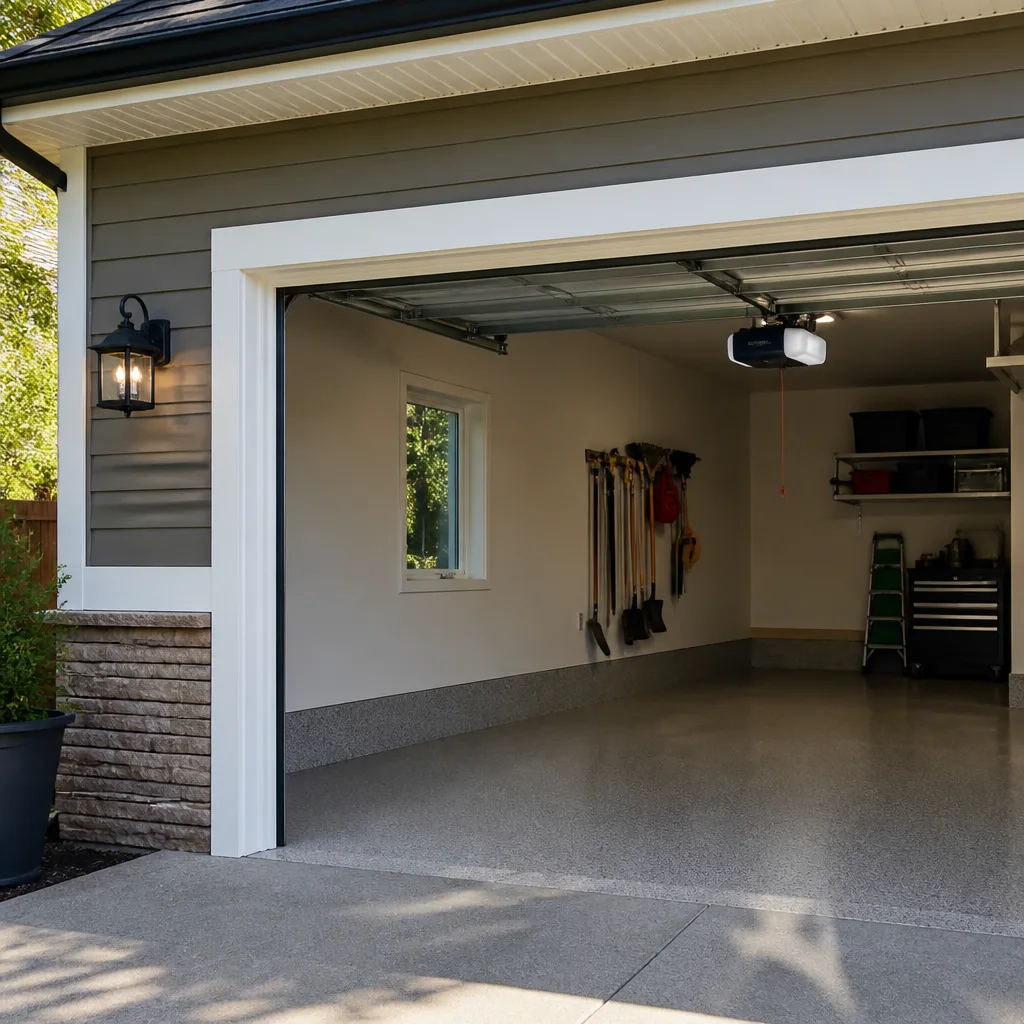 Chamberlain openers
Full 25-point door and opener safety check with every visit - springs, cables, rollers, tracks, and your LiftMaster or Chamberlain opener included
You get a price before we start. It does not change when the pro arrives.
Get your free estimateGarage Door Emergency Preparedness Guide for Elizabeth Homes
Most garage door emergencies don’t come out of nowhere. In Elizabeth they cluster around the same handful of triggers: a nor’easter that knocks out power for blocks, a cold snap that turns a tired torsion spring brittle, a summer thunderstorm that drops a limb on the top panel. The homeowners who come through those events best aren’t luckier. They know what to do in the first ten minutes. This guide covers the manual release cord and the check you make before you pull it, what to do when a spring snaps with the door stuck halfway, how to secure a damaged door overnight, a storm checklist built for Elizabeth weather, and exactly what to have ready before you dial a repair line. Read it once now, while everything works, and you’ll move faster when it doesn’t.
Quick Answer
Garage door emergency preparedness in Elizabeth comes down to three things: knowing how to release the door safely by hand, knowing which failures you can manage yourself and which need a trained technician, and having your door’s details on hand before you call for help. Never force a door with a broken spring, never pull the release cord on a door that’s hanging under spring tension, and never touch the springs, cables or brackets yourself. Everything else in this guide is about staying calm and getting back up and running.
Styles & brands we work with
- Raised-panel steel
- Carriage house
- Modern flush
- Full-view glass
- LiftMaster openers
- Chamberlain openers
Table of Contents
- Why Elizabeth Garage Door Emergencies Follow a Pattern
- How to Use the Manual Release Cord Safely
- What to Do When a Spring Snaps Mid-Cycle
- How to Secure a Door That Won’t Close
- Pre-Storm Checklist for Elizabeth Homes
- Power Outages and Opener Failures
- What to Have Ready Before You Call
- Preventive Checks That Head Off Most Emergencies
Why Elizabeth Garage Door Emergencies Follow a Pattern
Garage door failures in Elizabeth aren’t evenly spread across the calendar. They bunch up around weather. Once you see the pattern, you can prepare for it instead of reacting to it.
Three event types account for most of the urgent calls we field from Elizabeth homeowners.
Winter cold and wind. A torsion spring is a wound coil of steel under heavy load. When temperatures drop and stay down for days, that steel gets less forgiving, and a spring that’s been quietly thinning for a season picks the coldest week to let go. Add a nor’easter pushing wind against a door that isn’t fully sealed and you get panels flexing, tracks shifting, and rollers jumping out of their channels.
Power outages. A storm takes the grid down across a neighborhood and suddenly every automatic opener on the block is a dead weight. That’s a mechanical problem and a people problem at once: someone needs to get a car out, and the only way is the manual release.
Seasonal neglect. Doors in Elizabeth take a beating from humidity in summer and freeze-thaw cycles in winter. Hinges dry out, rollers flatten, cables fray where they run over pulleys. None of that announces itself. It just shortens the life of the part and raises the odds of a failure at the worst possible moment.
The practical takeaway: the week before a forecast storm and the first warm week after a cold stretch are your two best windows for a quick inspection. Not a repair, just a look and a listen.
How to Use the Manual Release Cord Safely
The manual release cord disconnects the door from the opener so you can lift it by hand. It’s a simple mechanism and it’s the single most useful thing in your garage during a power outage. It’s also the part where a rushed decision causes real injuries.
The cord hangs from the opener trolley, usually with a red handle. When you pull it, the trolley releases and the door is yours to move. That sounds straightforward until you remember the door weighs a few hundred pounds and is balanced by springs under enormous tension. If a spring is already broken, the door has nothing holding it up but the opener. Release the opener and the door comes down.
Before You Pull the Cord, Do This Check
- Look at the door. Is it sitting level, or is one side higher than the other? A lopsided door usually means a broken spring or a snapped cable.
- Look at the springs above the door. A clean break in the coil is easy to spot on a torsion spring over the header. Extension springs along the sides should look whole and straight.
- Look at the cables. If either one is hanging slack or has come off a pulley, stop.
- Listen. If the door shifted or banged when it stopped, treat it as under load.
- If anything looks wrong, don’t pull. Call for help. A technician can get the door open without putting you underneath it.
If everything looks sound, the door should be fully closed before you pull the cord. Stand clear of the door’s path, pull straight down on the handle in one firm motion, then lift the door slowly by hand. Most well-balanced doors lift with one hand. If it feels like you’re lifting a car, don’t force it. That resistance is a signal that the balance is off, and it’s an argument for a professional look rather than a workout. Our garage door repair service handles exactly this kind of balance problem.
What to Do When a Spring Snaps Mid-Cycle
A spring breaking sounds like a gunshot in a closed garage. If it happens while the door is moving, the door will usually stop partway and hang there. The instinct is to hit the button and see if it’ll finish. Don’t. A door with a broken spring is running on an opener that isn’t designed to carry that weight, and forcing it can burn out the motor, snap a cable, or bring the door down.
The Safe Position for a Door Stuck Halfway
Leave the door where it is and keep everyone clear of it. If a car is trapped inside, don’t try to slide under a partially open door to reach it. A hung door can drop without warning. If the door has to be opened to get a vehicle out, that’s a job with a technician in it, not a family project.
Then work through this:
- Turn off the opener at the wall control or the breaker so nobody at home presses the button by reflex.
- Keep children and pets out of the garage until the door is dealt with.
- Look at the door from a distance. Note which side is low, whether a cable is loose, and whether any panel is bent.
- Call for spring service. Spring work is one of the most dangerous jobs in the trade, and it’s not something to attempt with hand tools from a hardware store.
Spring replacement is one of our core services rather than an add-on, and it’s the reason we keep garage door spring repair on the same call as everything else. Springs are matched to the door’s weight, and a mismatched spring wears out fast or leaves the door badly balanced. Two techs with the right winding bars can usually have a door like this running again the same day. Our technicians have up to 12 years of experience with this exact repair.
How to Secure a Door That Won’t Close
Storm damage, a backed-into door, or a break-in attempt can all leave a door that won’t close all the way. Until it’s repaired, the garage is open to the weather and to anyone walking past. Here’s how to make it safe without making the damage worse.
First, stop the opener. Cut power to the motor so nobody cycles a bent door and does more damage.
Second, assess why it won’t close. Look along the tracks for a bend, look at the bottom seal for an obstruction, and look at the photo-eye sensors at the bottom corners of the opening. A misaligned sensor or a spiderweb across the lens will stop a door as surely as a broken spring will, and that’s a five-minute fix. If a track is bent or a panel is buckled, stop there.
Third, secure the opening.
- If the door closes but won’t stay down, a C-clamp on the track just above a roller will hold it in place. Do this only with the door fully closed and only as a temporary measure.
- If the door won’t close at all, back a vehicle up to the inside of the opening as a barricade if you have one to spare.
- For an opening that’s genuinely exposed, a sheet of plywood cut slightly wider than the opening and screwed into the framing is the standard temporary fix. Keep the fasteners above and below the door’s travel path.
Treat all of that as a stopgap measured in hours, not weeks. A door left propped or clamped puts strain on parts that weren’t designed for it. Call for repair the same day, and be clear that the door is currently secured rather than closed. For doors that won’t close at all, that’s exactly the situation our emergency service is built for.
Pre-Storm Checklist for Elizabeth Homes
Elizabeth sits in a part of New Jersey that gets its share of nor’easters, tropical remnants, and fast summer thunderstorms with high wind. None of that is unusual here; it’s the local weather. The prep work takes about fifteen minutes and it pays for itself the first time the power goes.
- Test the manual release now, while the power is on. Pull the cord with the door fully closed, lift the door by hand, and confirm it moves smoothly. Then re-engage the trolley by running the opener. Better to find a problem on a quiet afternoon than in the dark.
- Confirm the door is balanced. Disconnect the opener and lift the door halfway. It should stay put. If it drifts down or up, the springs are out of adjustment.
- Clear the tracks and the door’s path. Storms blow leaves and grit into the channels. A quick wipe with a rag and a check for anything leaning against the door saves a jam later.
- Check the weather seal along the bottom and sides. A torn seal lets wind-driven rain in and lets the door rattle in gusts.
- Look at the springs and cables one more time. Any rust, fraying, or gap in the coil is worth a call before the storm, not after.
- Know where your breaker panel is and which breaker runs the opener. If the door misbehaves during a storm, you can cut power to it fast.
- Move anything valuable off the garage floor near the door. Wind-driven rain gets in around a door that’s flexing, and standing water finds the lowest point.
- Put a flashlight and a pair of work gloves near the garage entry. If the power drops at night, you’re not hunting for them in the dark.
One more: if you drive an electric vehicle, charge it before a forecast storm. An outage that traps a gas car is an inconvenience. An outage that traps an uncharged EV is a bigger problem, and the manual release is your only way to move it.
Power Outages and Opener Failures
When the power goes out, the manual release is your way in and out. We covered the safety check above, and that’s the part that matters most. Beyond that, the goal during an outage is to leave the door disconnected and use it by hand until power returns.
Some openers have a battery backup. If yours does, it will lift the door a limited number of times before the battery is spent. Don’t burn those cycles on curiosity. Use them when you actually need the door to move.
When power comes back, re-engage the opener by running it once and letting the trolley reconnect. Then test the safety reverse: put a roll of paper towels in the door’s path and close it. The door should reverse on contact. If it doesn’t, the opener needs attention before you rely on it again.
Not every failure is a power outage, though. An opener that hums without moving, runs but doesn’t lift, or responds to the wall control but not the remote is usually a garage door opener repair job rather than a door problem. LiftMaster, Chamberlain, Genie and Craftsman units make up a large share of what’s installed in Elizabeth homes, and we work on all of them. We also service Clopay, Amarr, Wayne Dalton and Raynor doors, so when we arrive we’re not guessing at what’s in front of us.
For a door that’s stuck, jammed, or won’t close and can’t wait, emergency service is a real option here rather than a promise on a website. A call outside dispatch hours gets booked into the next opening, Sunday through Friday, 7am to 7pm.
What to Have Ready Before You Call
The difference between a fast repair and a frustrating one is often the information you have ready when you dial. A technician who knows the door’s brand, age, and symptom before arriving brings the right springs and the right parts. Here’s what to gather.
- The door’s brand. Look for a label on the inside of the door or on the bottom bracket. Clopay, Amarr, Wayne Dalton and Raynor all appear in Elizabeth garages, and knowing which one you have helps match parts.
- The opener’s brand and model. The label is usually on the back or side of the motor housing. LiftMaster, Chamberlain, Genie and Craftsman are common here.
- What the door is doing. Won’t open, won’t close, opens partway and reverses, runs but doesn’t lift, makes a banging noise. Be specific; “it’s broken” doesn’t help anyone.
- What happened right before it failed. A storm, a power cut, a car bumper, a cold snap. This is often the most useful thing you can tell us.
- Whether anyone has tried to fix it. Be honest about this. A door that’s been half-disassembled needs a different approach than one that simply stopped.
- Whether the door is currently open, closed, or secured. If it’s open to the weather, say so. It changes the priority.
- Your address and whether the garage is accessible. If a car is blocking the door from inside, mention it.
- A photo if you can take one safely. A clear shot of the springs and the door’s position saves time.
Have all of that in front of you and the call takes three minutes instead of fifteen. The price is quoted and agreed before any work starts, so there are no surprises on the invoice. We answer 24/7, with fast dispatch from 7am to 7pm, Sunday through Friday.
Preventive Checks That Head Off Most Emergencies
Very few garage door failures are truly sudden. Almost all of them are the last step in a slow decline that nobody was watching. A few minutes twice a year changes the odds considerably.
Twice a year, do a balance test. Disconnect the opener, lift the door halfway, and let go. A balanced door stays where you put it. One that sinks or rises needs a spring adjustment.
Once a year, lubricate the moving parts. Rollers, hinges, and the torsion bar get a light application of a garage-door lubricant, not WD-40 and not grease that collects grit. Wipe the tracks clean but don’t lubricate them; they’re meant to run dry.
Listen to the door. Grinding, squealing, or a rattle that wasn’t there last month is the door telling you something. A noisy door is usually a small fix now and a bigger one later.
Watch the door’s travel. If it hesitates, reverses for no reason, or stops short of closing, the opener’s travel limits or the safety sensors need attention.
Note the door’s age and the last time the springs were replaced. Springs have a finite cycle life, and a door that’s been opening and closing several times a day for years is running on borrowed time. Knowing roughly where you are helps you plan the replacement rather than react to a failure.
And when something does go wrong, remember that a broken garage door is a solvable problem. It’s inconvenient, sometimes expensive, and occasionally a genuine safety issue, but it’s fixable. The panic is usually worse than the repair. If you’d rather have a technician look things over before an emergency forces the issue, that’s a reasonable call to make. The full range of what we handle, from a sticky roller to a complete new door, is laid out at Elizabeth Garage Door Repair Co.
Common Mistakes to Avoid
- Pulling the release cord on a door with a broken spring. This is the most common way people get hurt during a storm. The check takes thirty seconds and it’s the difference between a safe release and a falling door.
- Hitting the opener button again and again. If a door is stuck, cycling the motor does nothing but burn it out and stress the cables. Cut the power and diagnose.
- Trying to fix a spring yourself. Torsion springs are under enough tension to break bones, and the winding bars are specialized tools for a reason. This is not a YouTube repair.
- Ignoring a door that’s running slow or noisy. In Elizabeth’s freeze-thaw winters, a small alignment issue becomes a bent track once the temperature drops. Fix it in the fall, not in January.
- Leaving a damaged door propped open for days. A temporary brace is a stopgap, not a repair. The longer a door sits out of its tracks, the more parts get damaged.
- Calling a handyman for spring or cable work. Many general handymen decline this work, and the ones who take it aren’t always equipped for it. Ask whether spring repair is done in-house before you book.
- Not knowing your door’s brand before you call. A technician who has to identify the door on arrival may need a second trip for parts. A two-minute look at the label saves a day.
See the difference
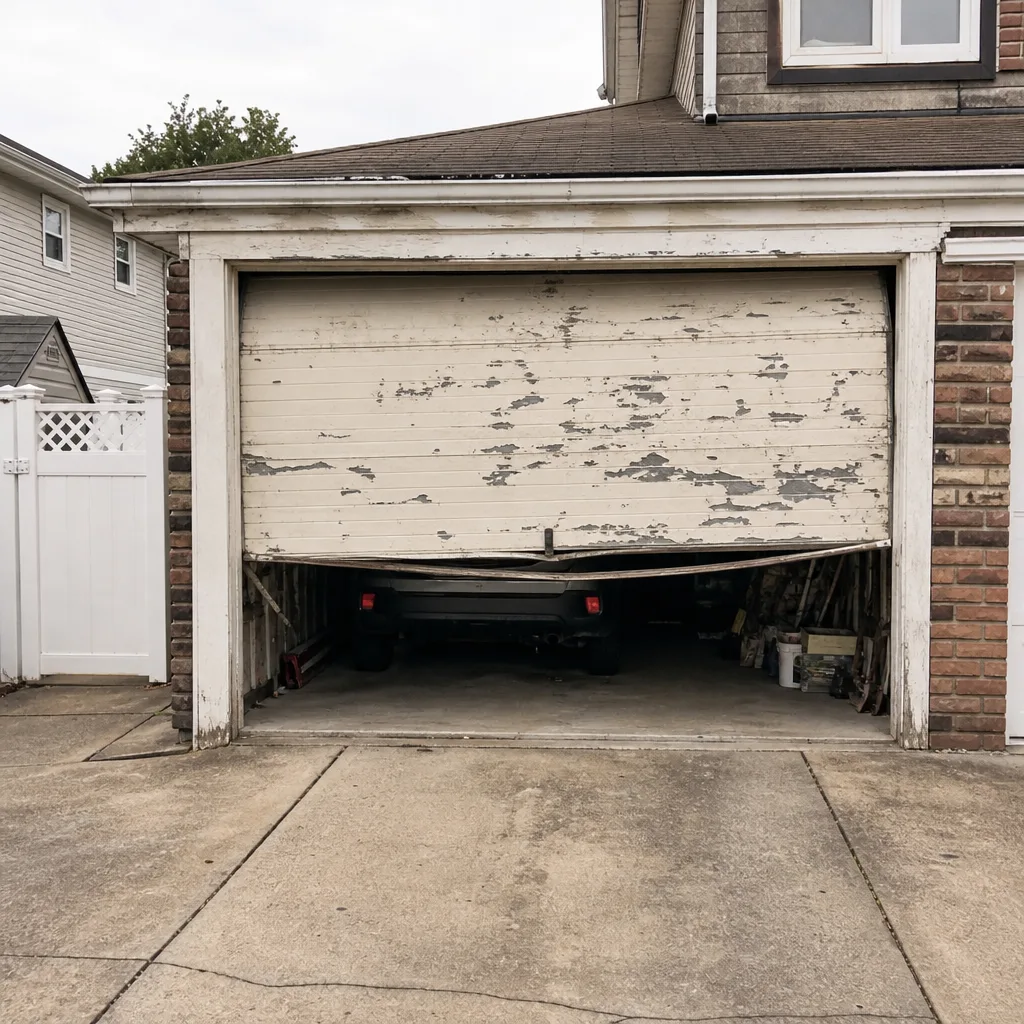 Before
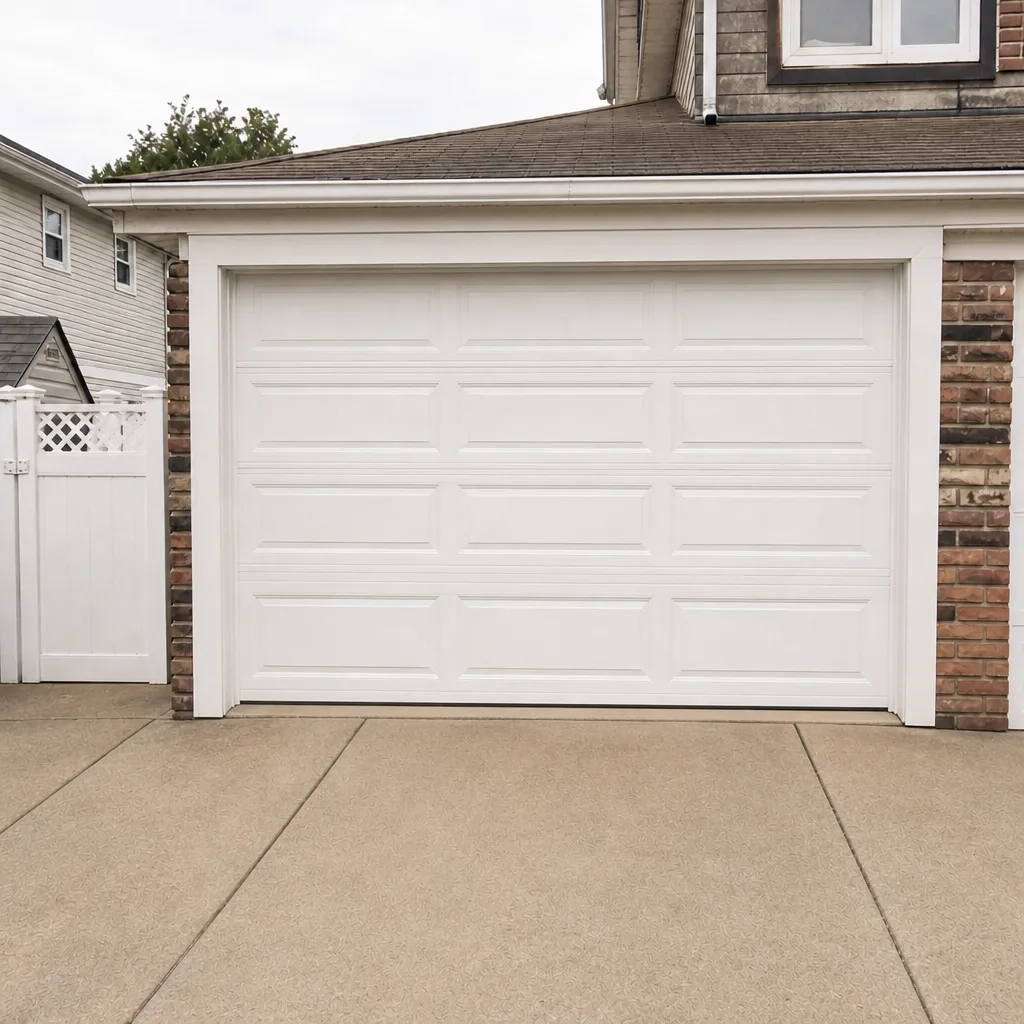 After
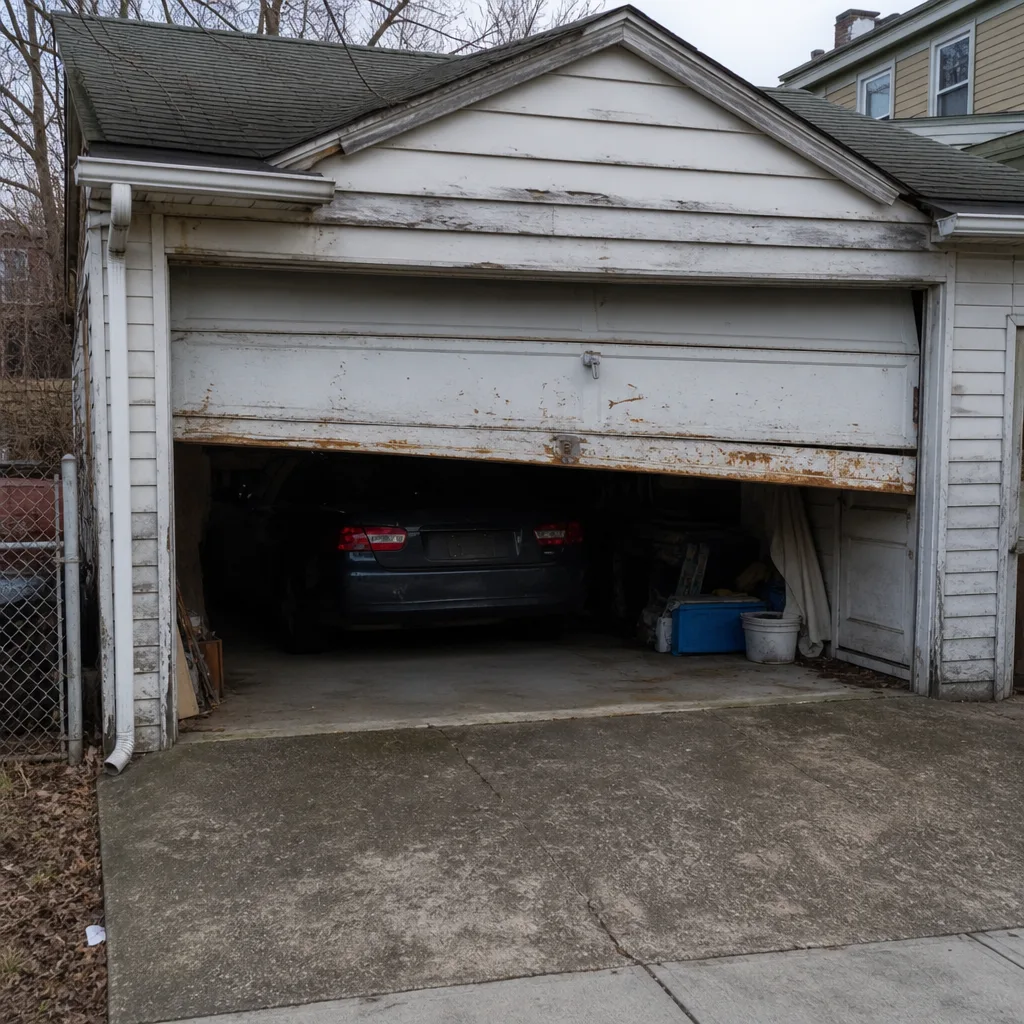 Before
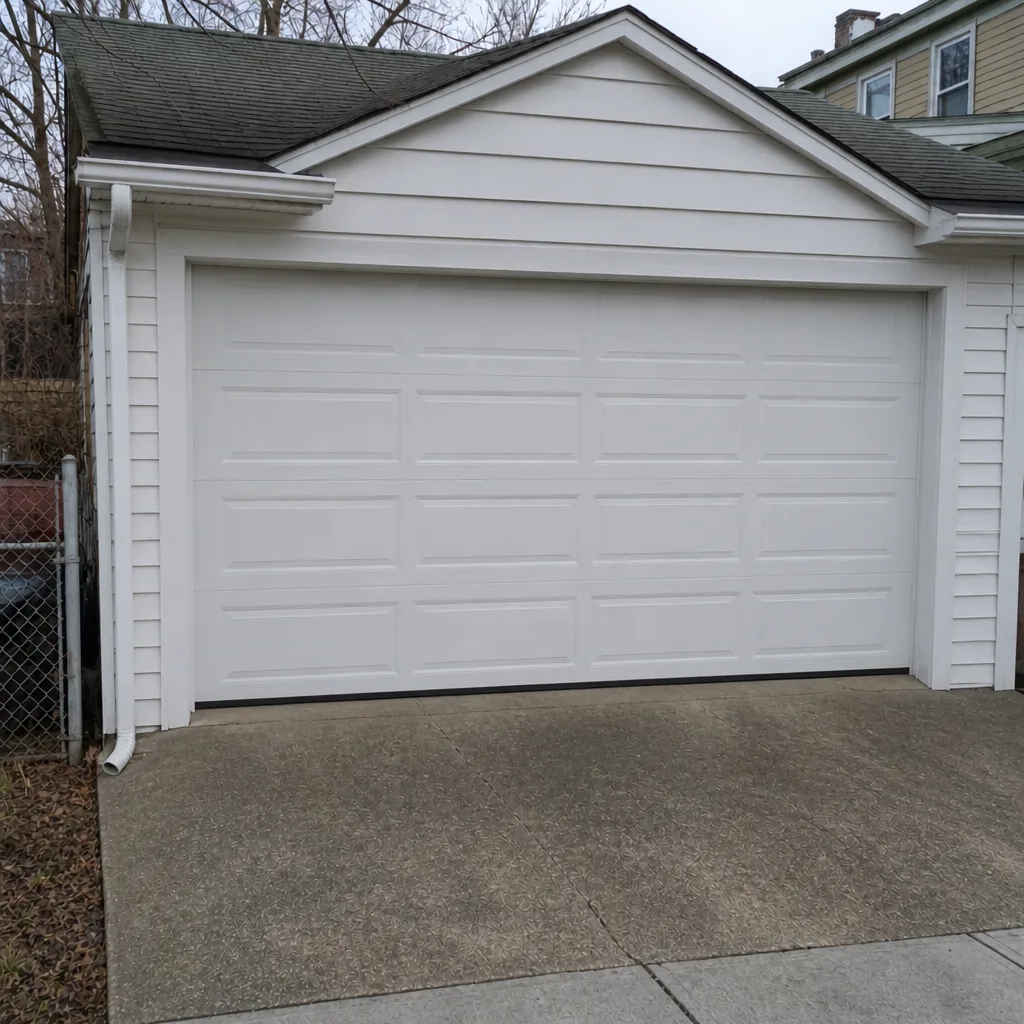 After
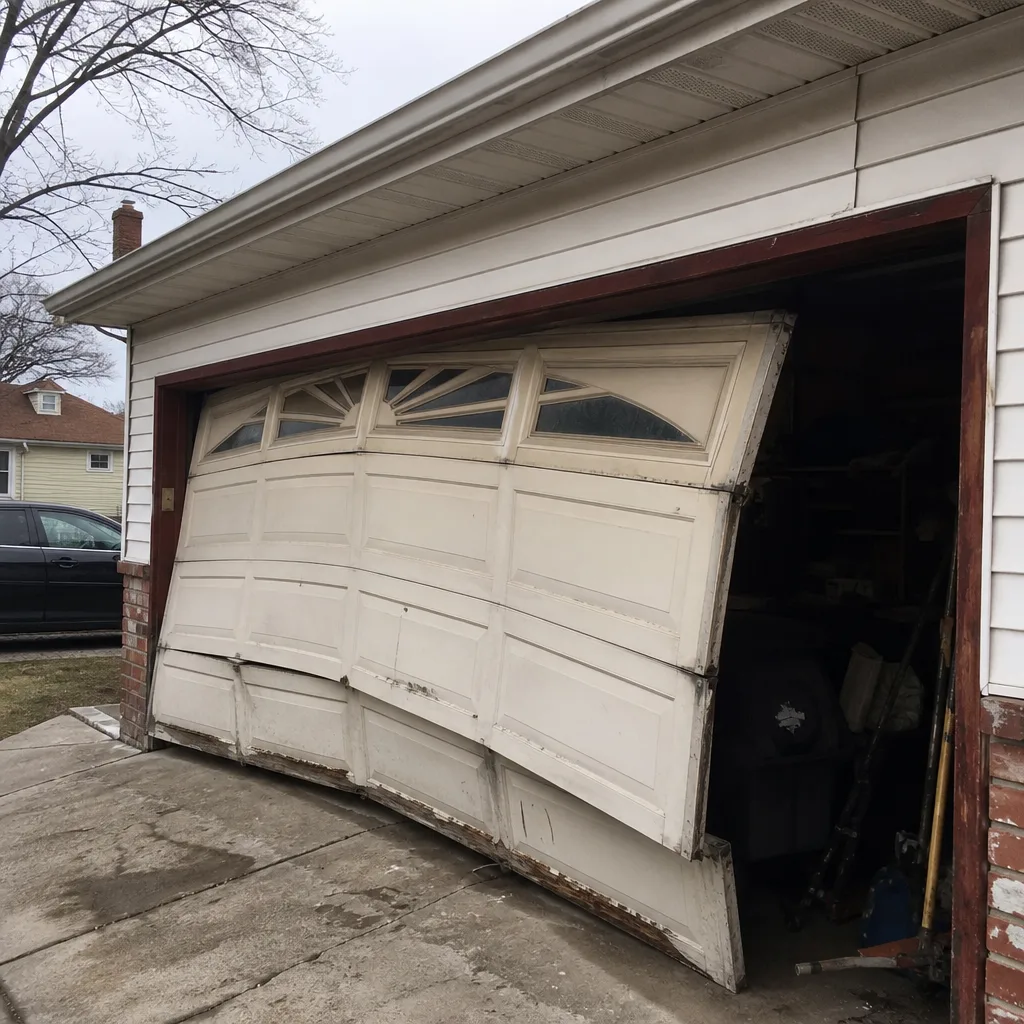 Before
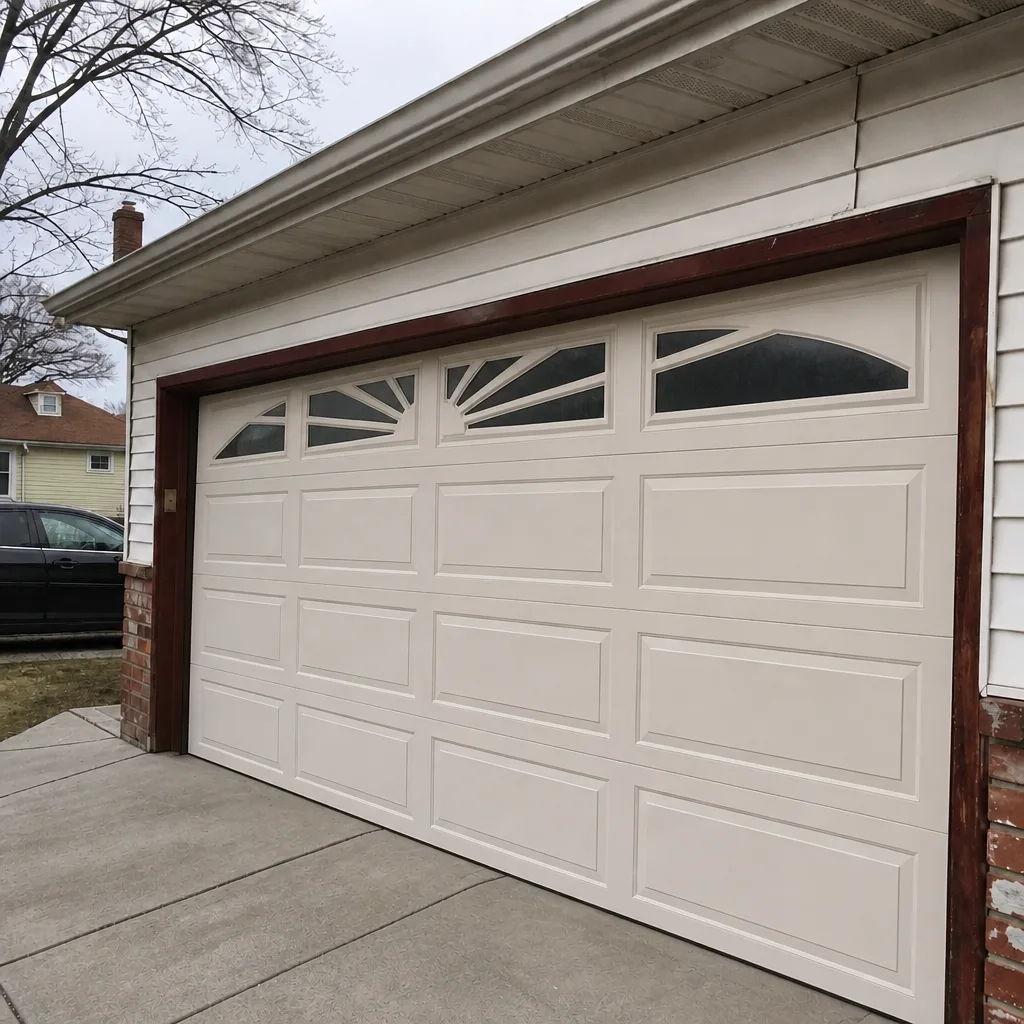 After
When to Call a Professional
Some problems are yours to handle: a remote with a dead battery, a sensor knocked out of alignment, a track with a leaf stuck in it. Others aren’t. Call a professional when a spring is broken or looks deformed, when a cable is slack or off its pulley, when the door is crooked or hanging partway, when the opener hums without moving the door, or when the door won’t close and you’ve already checked the sensors. Those are the situations where a wrong move does real damage. Elizabeth Garage Door Repair Co offers free estimates in Elizabeth. Call (866) 937-7593 and we’ll get you back up and running.
Frequently Asked Questions
Check the power first, then the sensors. Confirm the opener has power and that nothing has tripped the breaker. If the door is dead but the lights on the opener work, look at the photo-eye sensors at the bottom corners of the opening; a misaligned or dirty sensor will stop a door from moving. If the door is stuck partway or you hear a bang, stop and call for repair rather than cycling the opener. Call (866) 937-7593 for an exact quote; estimates are free.
Same-day service is available for most repair calls, and emergency service covers the situations that can’t wait until the next business day. A stuck door, a snapped spring, or a door that won’t close after storm damage all qualify. We answer 24/7, with fast dispatch from 7am to 7pm, Sunday through Friday. Call (866) 937-7593 and we’ll book the earliest opening.
Spring work is quoted per job based on the door’s size and weight and whether one or both springs need replacing, and the written estimate sets the final price. The estimate is free, and the price is agreed before any work starts, so nothing changes once the technician is on site. If a spring has snapped, don’t try to lift the door in the meantime. Call (866) 937-7593 for an exact quote.
Yes, if the door is in good repair and you do the check first. Look at the springs, springs and cables before you pull the release cord, and don’t release a door that’s lopsided or hanging under tension. A balanced door lifts with one hand; if it feels heavy, stop and call for help. Call (866) 937-7593 if you’re unsure.
We service LiftMaster, Chamberlain, Genie, Clopay, Amarr, Wayne Dalton, Craftsman and Raynor equipment, which covers the vast majority of what’s installed in Elizabeth homes. That breadth means we don’t have to send you elsewhere because your door isn’t the “right” brand. Call (866) 937-7593 and tell us what you have.
No. The written estimate is the price. We inspect the door, explain what needs to happen, and quote the work before anything starts. If the scope changes once parts come off, we discuss that with you before proceeding, not after. Call (866) 937-7593 for a free estimate.
The Bottom Line
Garage door emergencies in Elizabeth aren’t random. They arrive with the weather and with parts that were already on their way out. Prepare for the pattern and you’ll handle the next one in minutes rather than hours. Test your manual release while the power is on. Do the safety check before you ever pull the cord. Leave a door with a broken spring where it sits and call for help. Secure an open door with a brace and treat it as a stopgap. Keep your door’s brand and symptom list where you can find them. None of that requires special tools, and all of it makes the next storm a lot less interesting. When you do need help, call (866) 937-7593 for a free estimate.
Written by the team at Elizabeth Garage Door Repair Co.